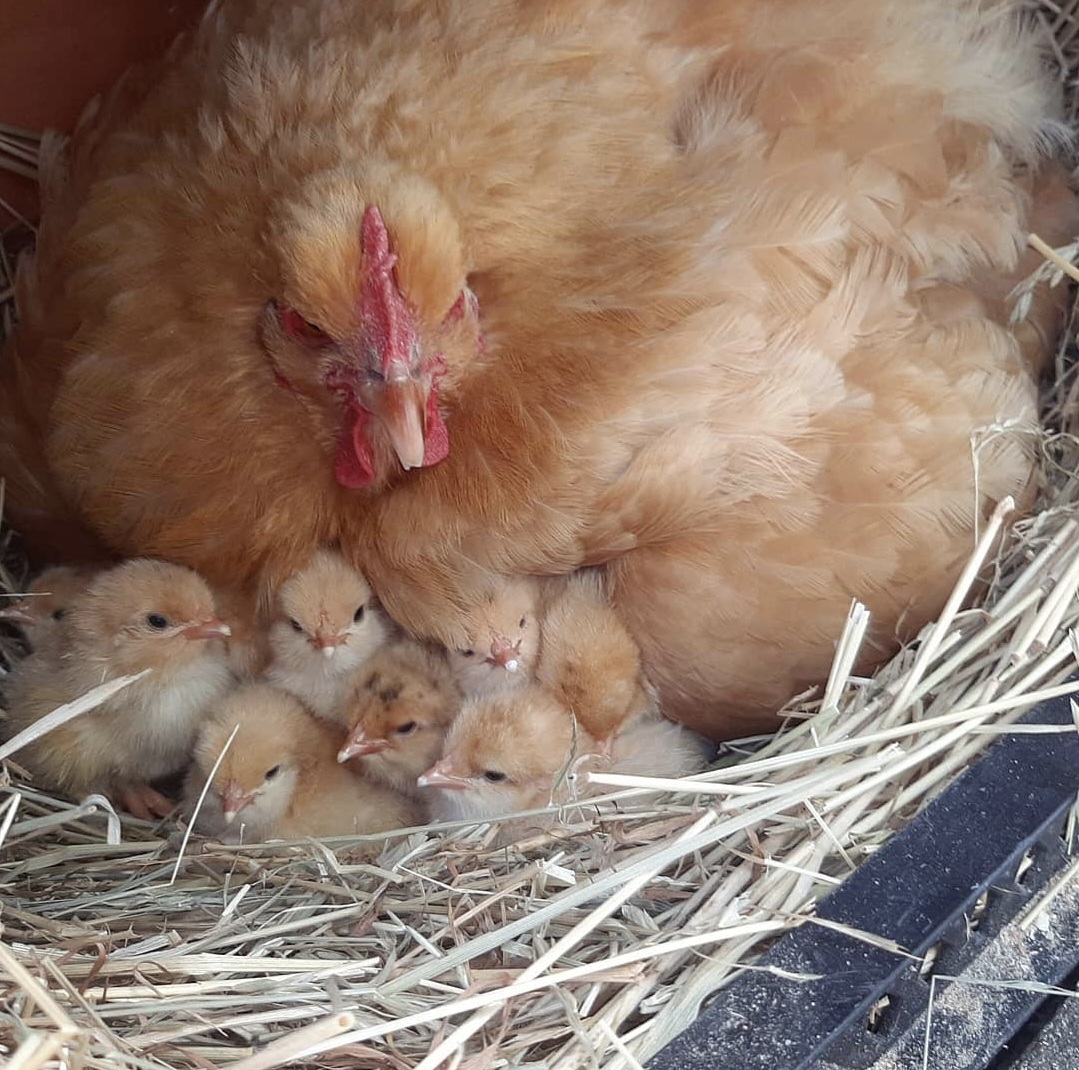
The Buff Orpington is a large, golden, friendly dual-purpose chicken from England, prized for calm temperament, cold hardiness and a steady supply of brown eggs. Hens typically lay about 150 to 250 eggs a year, and APA standard weights are 10 pounds for a cock and 8 pounds for a hen, with a bantam version of about 36 to 40 ounces.
Buff is the most popular Orpington color in the US and the first one the APA recognized, in 1902. The breed also comes in Black, White and Blue, plus newer colors such as Lavender that hatcheries sell widely but the APA has not accepted. This guide covers the Buff in detail and explains how the other varieties fit in.
Buff Orpington Quick Facts
- Egg color
- Light Brown, Brown
- Eggs per year
- 150 to 250
- Egg size
- Large
- Size class
- Large fowl and bantam
- Hen weight, standard
- 8 lb
- Rooster weight, standard
- 10 lb
- Hen weight, bantam
- 36 oz
- Rooster weight, bantam
- 40 oz
- Temperament
- Docile
- Cold hardiness
- High
- Heat hardiness
- Medium
- Broodiness
- Frequent
- Noise level
- Quiet
- Good for beginners
- Yes
- Confinement
- Good
- Purpose
- Dual purpose
- Start of lay
- 22 to 26 weeks
- Comb type
- Single
- Feathered feet
- No
- Crest
- No
- Origin
- Orpington, Kent, England
- APA / ABA recognition
- APA: English class (Buff, 1902); ABA: Single Comb Clean Legged
- Conservation status
- Not listed
- Lifespan
- 8 to 10 years
History and Origin
The Orpington was created by William Cook, a coachman in the town of Orpington in Kent, England. According to the Livestock Conservancy, he crossed Minorca roosters with Black Plymouth Rock hens, then crossed their offspring with clean-legged Langshans, and introduced the result as the Black Orpington in 1886. His aim was a productive farm bird that laid well and dressed out as a good table fowl.
Cook went on to develop White, Buff, Jubilee and Spangled varieties, and his son-in-law later added Blue and Cuckoo. The Buff, a warm golden color, quickly became the favorite. Orpingtons reached America by about 1891, Cook brought over a large importation in 1903, and Midwestern farmers embraced the Buff in particular.
The APA admitted the Buff Orpington to its Standard of Perfection in 1902, followed by Black and White in 1905 and Blue in 1923. Like many heritage breeds, the Orpington declined as commercial hybrids took over egg and meat production, and it spent years on the Livestock Conservancy’s priority list before graduating from it in 2016.
Appearance and Varieties
An Orpington is broad, deep and low set, with a short back, a curvy U-shaped outline and soft, fairly loose feathering that makes it look even bigger than it is. It has a medium single comb, red earlobes, white skin and pinkish-white shanks with no feathering. Yellow skin or shanks are faults in the APA standard.
Buff Orpington Coloring
A good Buff Orpington is an even, rich golden buff from head to tail, with the color carried down into the under fluff. Uneven shading, white in the wings or tail, or a brassy cast are common in hatchery birds and are faulted in shows. Buff hens often fade a little in the sun, so exhibitors keep show birds shaded.
Recognized and Unrecognized Colors
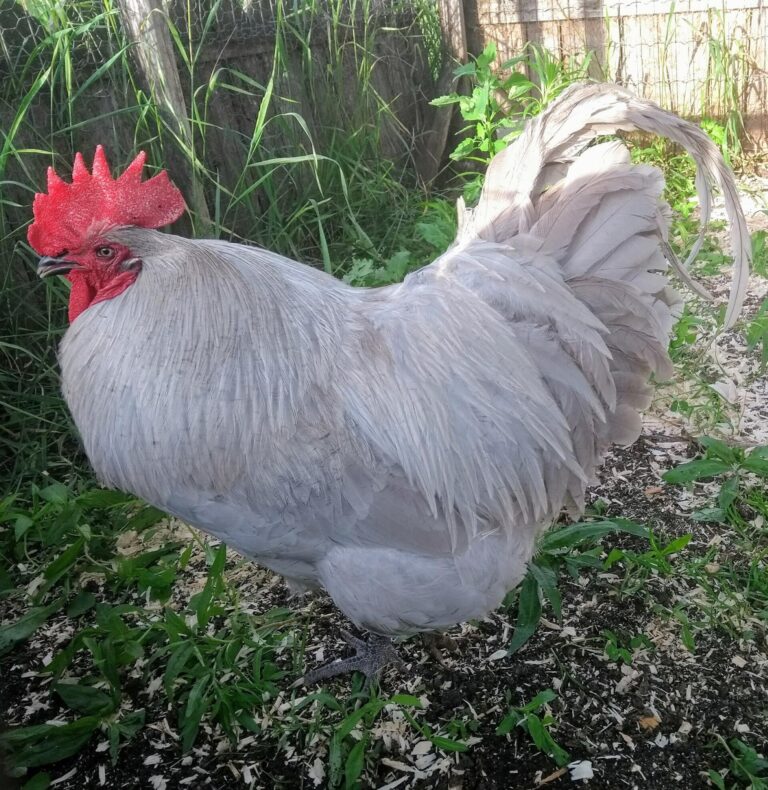
The APA’s accepted breeds list includes four Orpington varieties in both large fowl and bantam. Lavender, also called self blue, is a newer color that breeds true and is popular with backyard keepers, but it does not appear on the APA list and remains unrecognized, as do colors such as Chocolate and Jubilee. The APA also does not recognize the heavier English type Orpington as a separate breed.
| Orpington Variety | APA Status | Notes |
|---|---|---|
| Buff | Recognized (1902) | Most popular US color |
| Black | Recognized (1905) | Cook’s original 1886 variety |
| White | Recognized (1905) | Introduced by Cook after the Black |
| Blue | Recognized (1923) | Does not breed true; produces black, blue and splash chicks |
| Lavender (self blue) | Not recognized | Breeds true; widely sold by hatcheries |
| Chocolate, Jubilee, Cuckoo and others | Not recognized | Available from breeders and some hatcheries |
Temperament
Buff Orpingtons are famous for being calm, gentle and friendly. Murray McMurray Hatchery describes them as good with children and well suited to companionship and 4-H projects, and many hens are content to be held. They usually get along well in mixed flocks and rarely develop bad habits in a reasonably sized run.
Their easygoing nature has trade-offs. Orpingtons are not especially predator-savvy and cannot fly well, so they depend on a secure coop and run. They also tend to sit low in the pecking order when kept with assertive breeds. Roosters are generally mild, though any male can be protective in breeding season.
Egg Laying
A Buff Orpington hen typically lays about 150 to 250 large light brown eggs a year. Cackle Hatchery estimates 150 to 280 for its lines, and McMurray notes that hens often lay 3 to 4 eggs a week for their first two years before slowing to about 2 a week. Production varies widely by strain: utility hatchery birds generally lay more than heavy exhibition birds.
Pullets usually begin laying at around 22 to 26 weeks, and Orpingtons keep laying reasonably well through cold weather. Hens also go broody fairly often. That makes them excellent mothers if you want to hatch chicks, but each broody spell pauses egg production, so collect eggs daily if you want to discourage it.
Care Needs
Orpingtons are easy, hardy birds that do well in most of the US. Their size and dense feathering make them very cold hardy, and Cackle notes they handle heat with shade, airflow and cool water. In hot, humid summers, watch for panting and holding wings away from the body, which are signs a bird is struggling with heat.
Space and Housing
Standard Orpingtons are large birds, so give them roomy nest boxes, sturdy roosts and enough floor space to avoid crowding. Their heavy build makes high roosts less practical, so keep perches at a moderate height. Because they are easy to contain and handle confinement well, they suit fenced backyards.
Feeding and Health
Orpingtons have hearty appetites and can become overweight, which can reduce laying. Feed a complete layer ration, keep treats modest, and give them room to forage. Their loose feathering hides lice and mites, so check under the vent and wings regularly. For any serious illness or injury, contact a veterinarian who treats poultry.
Bantam vs Standard Orpington
The bantam Orpington is a small version of the same bird, with the same shape, colors and gentle nature. The APA admitted bantam Orpingtons to its standard in 1960, in the same four colors as the large fowl. Bantams eat much less, need less space and lay small brown eggs, making them a good fit for small yards.
| Bird | Standard Orpington | Bantam Orpington |
|---|---|---|
| Cock | 10 lb | 40 oz |
| Hen | 8 lb | 36 oz |
| Cockerel | 8.5 lb | 36 oz |
| Pullet | 7 lb | 32 oz |
| Eggs | Large, light brown | Small, brown |
| APA class | English | Single Comb Clean Legged bantam |
Standard weights follow the APA standard, and bantam weights come from Cackle Hatchery’s breed listing. Individual birds vary, and English type Orpingtons sold by some hatcheries often run heavier than these figures.
Who the Buff Orpington Suits
The Buff Orpington is one of the best breeds for beginners, families with children, and keepers in cold climates who want a dependable layer with a sweet personality. It is also a good choice if you want a broody hen to hatch chicks, or a dual-purpose bird for eggs and the occasional table bird.
It is less ideal for very small yards, where a bantam Orpington or another bantam breed makes more sense, and for keepers who need maximum egg numbers, where a production hybrid will outlay it. In very hot regions it still does fine, provided you give it shade and airflow.
Where to Buy Buff Orpington Chicks
Buff Orpingtons are among the easiest chicks to buy. Cackle Hatchery, Murray McMurray Hatchery, Meyer Hatchery and most farm stores sell them each spring, often sexed as pullets. Hatcheries also offer bantam Buff Orpingtons and, in some cases, English type or Lavender Orpingtons.
For show-quality birds, find breeders through the APA, the American Bantam Association or local poultry shows. Choose flocks enrolled in the National Poultry Improvement Plan (NPIP), and if you buy Lavender or English type birds, remember that they cannot be shown as recognized APA varieties.
Frequently Asked Questions
Quick answers to common questions about Buff Orpingtons.
How Long Do Buff Orpingtons Live?
A Buff Orpington typically lives 8 to 10 years. Keeping a Buff Orpington at a healthy weight, checking for lice and mites under its loose feathering and providing a secure coop all support a long life, though laying slows well before then.
How Long Do Buff Orpingtons Lay Eggs?
Buff Orpington hens lay best for their first two years, often 3 to 4 eggs a week, then slow to about 2 eggs a week. Many keep laying at a reduced rate for several more years, with breaks for broody spells and winter.
How Do You Tell a Buff Orpington Rooster from a Hen?
Buff Orpington chicks look alike at hatch, so hatcheries rely on trained vent sexers. At home, cockerels usually show larger combs and wattles by 4 to 6 weeks, and long, pointed saddle feathers in front of the tail by about 3 months.
Are Buff Orpingtons Noisy?
No, Buff Orpingtons are one of the quieter backyard breeds. Buff Orpington hens are calm, gentle birds that rarely make a fuss, but a Buff Orpington rooster still crows, so check local rules before keeping one.
Sources (7)
Breed facts and figures on this page were checked against these references.
- The Livestock Conservancy: Orpington Chicken
- Cackle Hatchery: Buff Orpington Chicken
- Cackle Hatchery: Buff Orpington Bantam
- Murray McMurray Hatchery: Breed Spotlight: Orpington
- Kansas State University 4-H: American Poultry Association Accepted Breeds and Varieties (2021)
- Mississippi State University Extension: Sexing of Day-Old Chicks
- My Pet Chicken: How Can I Tell if My Juvenile Bird Is a Rooster?
 Polish Chicken
 Sussex Chicken
 Lavender Orpington
 Easter Egger Chicken