
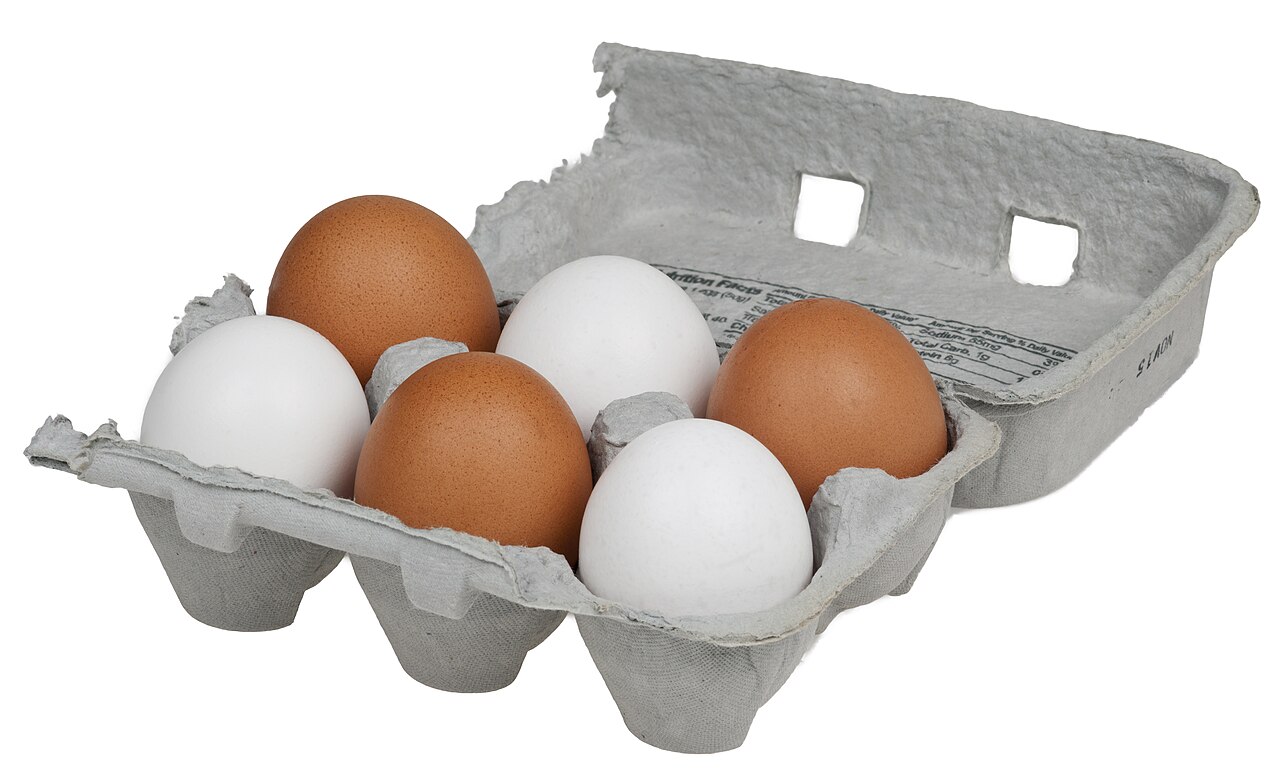
A typical backyard hen lays somewhere between about 180 and 320 eggs a year in her first two laying seasons, depending mostly on breed. Production hybrids sit at the top of that range, while heritage, ornamental and bantam breeds usually lay fewer eggs.
Use the calculator below to estimate what your own flock will produce. Add a row for each breed you keep, enter how many hens of that breed you have, and the calculator returns eggs per week, dozens per week and eggs per year as a range.
How the Calculator Works
Each row is a breed and a number of hens. The breed list includes every breed profile on BantamChickens.com, plus two general options for birds that do not fit a profile: “Production hybrid (sex link, ISA Brown type)” at 280 to 320 eggs a year, and “Mixed backyard hen (breed unknown)” at 180 to 250 eggs a year. You can add as many rows as you need for a mixed flock.
The calculator multiplies each breed’s typical yearly range by the number of hens in that row, adds the rows together, and then divides by 52 for a weekly figure and by 12 again for dozens. The ranges are based on typical first and second year production, when hens lay best. They assume healthy hens of laying age with good feed, fresh water and reasonable daylight.
Worked Examples
Here is what the calculator returns for a few simple flocks using the two general options. Weekly and dozen figures are rounded.
| Flock | Eggs per Year | Eggs per Week | Dozens per Week |
|---|---|---|---|
| 3 production hybrids | 840 to 960 | About 16 to 18 | About 1.3 to 1.5 |
| 4 mixed backyard hens | 720 to 1,000 | About 14 to 19 | About 1.2 to 1.6 |
| 2 production hybrids and 3 mixed hens | 1,100 to 1,390 | About 21 to 27 | About 1.8 to 2.2 |
Treat the result as an average across a good laying year. You will see more eggs than this in late spring and early summer and fewer, sometimes none, in late fall and winter.
Typical Eggs per Year by Breed Type
Breed is the single biggest factor in how many eggs a hen lays. The table below gives typical annual ranges for common breed types, drawn from hatchery and conservation breed data. Individual hens vary, and so do strains within a breed.
| Breed Type | Examples | Typical Eggs per Year |
|---|---|---|
| Production hybrids | Red Star, black and red sex links, ISA Brown type | 280 to 320 (hatcheries list up to about 365 under ideal conditions) |
| Mediterranean layers | Leghorn | 220 to 300 |
| Dual purpose heritage breeds | Rhode Island Red, Barred Rock, Australorp, Buff Orpington | 200 to 280 |
| Medium dual purpose breeds | Wyandotte | 180 to 260 |
| Mixed backyard hens | Breed unknown | 180 to 250 (calculator assumption) |
| Heavy ornamental breeds | Standard Cochin | 110 to 160 |
| Bantams | Wyandotte bantam, Cornish bantam | Varies widely, from about 60 to 90 for Cornish bantams to 150 or more for Wyandotte bantams |
Bantams deserve a special note. Their eggs are small, so even a good bantam layer gives you less egg by weight than a standard hen. Many keepers find that two or three bantam eggs replace one large egg in a recipe. If you keep bantams for eggs, choose a breed whose profile shows reasonable production rather than an ornamental true bantam.
Daylight and the Laying Season
Hens lay in response to day length. Oregon State University Extension advises keeping day length above 12 hours, with 14 to 16 hours typical for good production. Virginia Cooperative Extension notes that production falls and often stops once day length drops below 12 hours, which in much of the US happens from about October through February.
That is why winter is the low point of the year for most backyard flocks. Some keepers add supplemental light on a timer to reach about 14 hours a day, usually in the early morning so the birds go to roost naturally at dusk. Extension sources recommend leaving at least six hours of continuous darkness. Whether to light the coop is a personal choice, and many keepers prefer to let hens rest over winter.
Molt
Most adult hens molt once a year, usually in late summer or fall as days shorten. University of Arizona Cooperative Extension describes molt as a period when hens reduce or stop laying because their energy goes into regrowing feathers, and it can last several months. Pullets hatched in spring or summer generally do not molt in their first autumn, which is why young birds often keep laying through their first winter.
The calculator’s yearly range already accounts for a normal molt and seasonal slowdown. If several of your hens molt at the same time, expect a sharp but temporary drop in the weekly count. A higher protein feed during molt helps hens regrow feathers and return to lay.
How Age Affects Egg Numbers
Pullets usually begin laying between about 18 and 22 weeks of age, depending on breed. Oregon State University Extension reports that hens reach peak production at about 35 weeks of age, laying at a rate above 90 percent, and that peak lasts about 10 weeks before production declines slowly. Hens generally produce well until 2 to 3 years old.
University of Arizona Cooperative Extension says hens peak in their first one to two years, with output dropping each year after that and often becoming sporadic by age 3 or 4. Older hens may lay larger eggs, but less often. Virginia Cooperative Extension notes that hens can lay efficiently for about two laying cycles of 50 to 60 weeks each. Hens can keep laying for years beyond that, just at a lower rate, and University of Minnesota Extension notes production can continue for 5 to 10 years.
Because the calculator is based on first and second year production, adjust your expectations down for older hens. A flock of four year old hens may lay well under the low end of the range.
Other Reasons a Flock Lays Less
If your real count falls well short of the calculator’s estimate, look at the usual causes before assuming something is wrong with the birds.
- Feed: a complete layer feed with about 16 to 18 percent protein, plus oyster shell on the side, supports steady laying.
- Treats: too many scraps or scratch grains dilute the nutrition in a complete feed.
- Water: hens that run short of water, including when it freezes, lay less.
- Stress: predators, moving house, new flockmates and extreme heat all slow laying.
- Broodiness: a hen sitting on eggs stops laying until she gives up or raises chicks.
- Hidden nests: free-range hens sometimes lay in a spot you have not found yet.
Parasites and illness can also reduce laying. If a hen stops laying and also looks unwell, such as sitting hunched, losing weight or showing changes in droppings, contact a veterinarian who treats poultry.
Planning How Many Hens You Need
You can also run the calculator backward. A household that uses about a dozen eggs a week needs roughly three or four productive hens, a little more if you want enough to cover the winter slowdown. Standard hens give you more egg per bird, while bantams give you more birds per square foot of yard. Once you have a number in mind, our coop size calculator will tell you how much space that flock needs.
Frequently Asked Questions
Quick answers to common questions about how many eggs chickens lay.
Do Hens Need a Rooster to Lay Eggs?
No, hens do not need a rooster to lay eggs, and they lay once they reach sexual maturity whether or not a male is present. A rooster is needed only for fertile eggs that can hatch into chicks.
How Many Eggs Does a Chicken Lay a Day?
A chicken lays at most one egg a day, because forming each egg takes about 26 hours. That cycle pushes laying a little later each day until the hen skips a day and starts over, which is why even top layers fall short of 365 eggs a year.
What Time of Day Do Chickens Lay Eggs?
Chickens typically lay their eggs in the morning hours, so a late morning collection gathers most of the day’s eggs. Because each egg takes about 26 hours to form, some hens lay later in the day before skipping a day and resetting.
How Many Eggs Will 12 Hens Lay a Day?
Twelve young hens lay around 9 to 10 eggs a day for several months after they start laying, according to N.C. Cooperative Extension. By about a year after laying begins, the same flock may slow to around six eggs a day.
Sources (9)
These are the references used to check the facts on this page.
- Oregon State University Extension: Why Did My Chickens Stop Laying?
- Virginia Cooperative Extension: Why Have My Hens Stopped Laying? 5 Factors That Impact Egg Production
- University of Arizona Cooperative Extension: Nine Common Reasons Your Hens Aren’t Laying
- Cackle Hatchery: Chicken Breeds List
- Murray McMurray Hatchery: Red Star
- Mississippi State University Extension: Choosing the Right Breed for Your Backyard Flock
- University of Kentucky Cooperative Extension: So You Want to Produce Your Own Eggs? (ASC-217)
- University of Wisconsin Division of Extension: Life Cycle of a Laying Hen
- N.C. Cooperative Extension, Sampson County: Backyard Flock Egg Production
 Chicken Feed Calculator
 Chicken Breed Finder
 Chicken Coop Size Calculator