
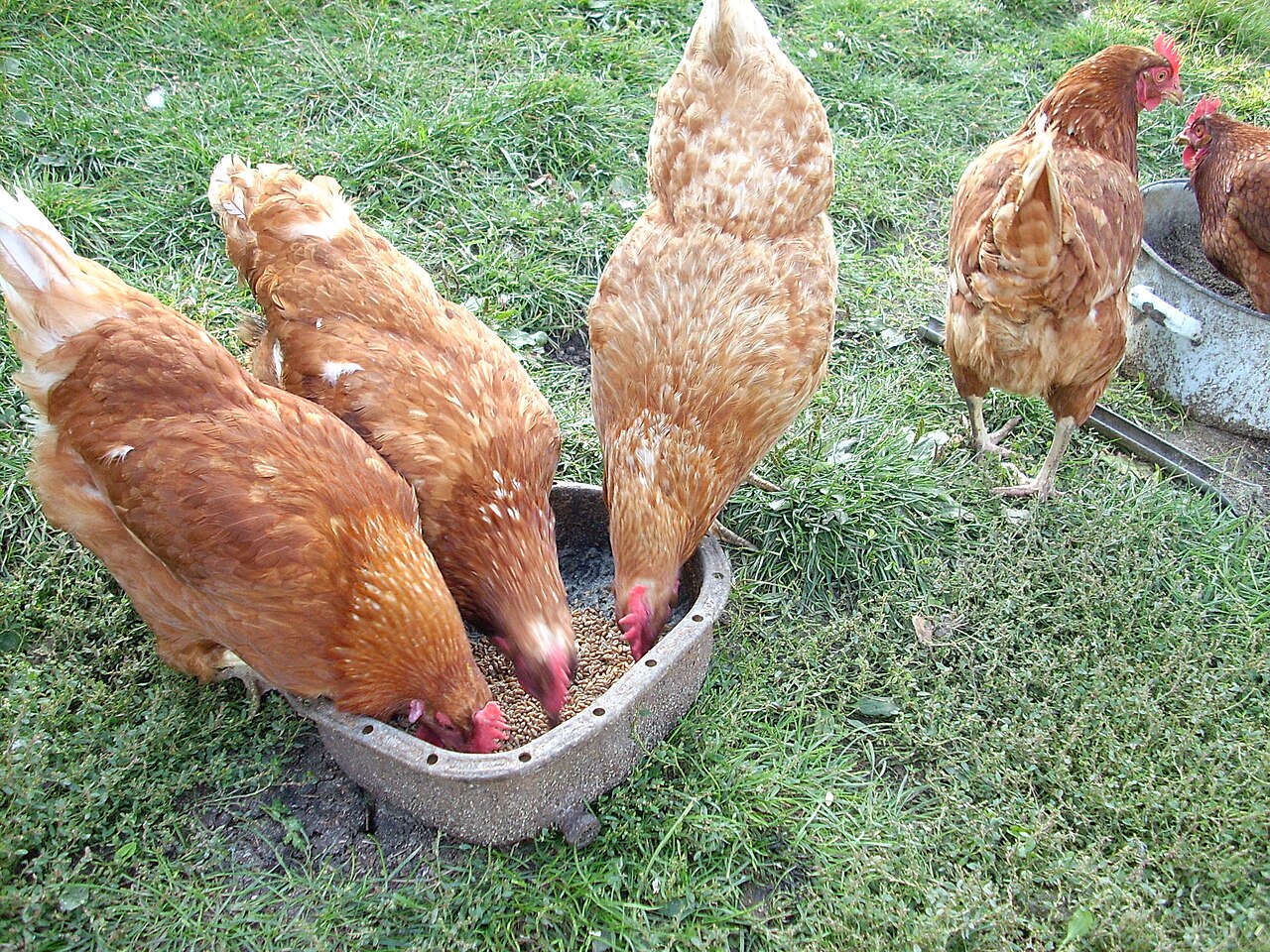
A standard-size laying hen eats about a quarter pound (roughly 4 ounces) of complete feed a day, and a bantam eats roughly half that. A flock of six standard hens therefore goes through about 1.5 pounds a day, or a 50 pound bag in a little over a month.
Enter your flock below to get feed per day, per week and per month, how many days a bag will last, and your monthly feed cost if you add the price you pay per bag.
How the Calculator Works
The calculator asks for the number of standard-size hens, the number of bantams, your bag size in pounds (50 is filled in by default) and, if you like, the price per bag. It assumes about 0.25 pound of complete feed per standard hen per day and about 0.125 pound per bantam per day.
From those figures it adds up your flock’s daily feed, multiplies for a week and a month, divides your bag size by daily use to show how many days a bag lasts, and, if you entered a price, works out what feed costs you each month.
| Flock | Feed per Day | Feed per Week | Days a 50 lb Bag Lasts |
|---|---|---|---|
| 3 standard hens | 0.75 lb | About 5.3 lb | About 67 |
| 6 standard hens | 1.5 lb | 10.5 lb | About 33 |
| 4 standard hens and 4 bantams | 1.5 lb | 10.5 lb | About 33 |
| 8 bantams | 1 lb | 7 lb | 50 |
| 12 standard hens | 3 lb | 21 lb | About 17 |
The four plus four flock uses the same feed as six standard hens. That is the bantam effect in practice: more birds for the same feed bill.
Where the Quarter Pound Figure Comes From
Extension feeding tables support a figure of roughly a quarter pound a day for a laying hen. Alabama Cooperative Extension lists feed intake for laying hens at 18 to 27 pounds per 100 hens per day, which works out to about 0.18 to 0.27 pound per hen. A University of Maryland Extension table, based on University of Georgia data, puts total layer feed from 19 to 70 weeks of age at about 80 pounds for a white egg hen and 104 pounds for a brown egg hen, or roughly 0.2 to 0.3 pound per day over that period.
Heavier birds eat more. University of Minnesota Extension notes that a 6 pound hen will eat roughly 3 pounds of feed a week, which is closer to 0.4 pound a day. If you keep big breeds such as Brahmas, Jersey Giants or Orpingtons, expect your real use to run above the calculator’s estimate.
The Bantam Figure Is an Estimate
Extension feeding tables are built around standard and commercial birds, and published daily intake figures for bantams are scarce. The calculator’s half ration for bantams is an estimate based on their much smaller body size. University of Maryland Extension notes that bantams eat less feed than large poultry, but tiny true bantams may eat less than half and large bantam versions of heavy breeds may eat a bit more. Watch your bag and adjust.
What Changes How Much Chickens Eat
The calculator gives a sensible average. Your real use will move up and down through the year for several reasons.
Cold Weather
Chickens burn more energy keeping warm, so they eat more in winter. Alabama Cooperative Extension notes that hens eat more in cold weather and less in summer heat, and University of Minnesota Extension says the same. Expect to buy bags more often from late fall through early spring.
Molt
Regrowing a full coat of feathers takes protein. Laying usually drops during molt, but feed use does not necessarily fall, and extension sources suggest a higher protein feed or supplement during this period to help hens through it.
Free Ranging
Birds that range over grass and garden find insects, seeds and greens, which can cut the amount of bagged feed they eat. The savings depend on the season and your land, so treat the calculator’s figure as the upper end for a free-range flock. Keep complete feed available, since forage alone rarely provides a balanced diet.
Waste
Feed that ends up in the bedding or under the feeder still counts against your bag. Alabama Cooperative Extension recommends filling troughs no more than half full and setting them at about the height of the birds’ backs. Spilled feed also attracts rodents and wild birds. If your bag runs out much faster than the calculator predicts, check for waste before assuming the birds are eating more.
Treats
Kitchen scraps and scratch grains displace complete feed. A common guideline is to keep treats to no more than about 10 percent of what birds eat each day, so the balanced feed still does most of the work.
Feed Types by Age
The calculator assumes adult hens on a complete layer feed. Young birds need different rations, and the right one matters more than the amount.
| Age | Feed Type | Typical Protein |
|---|---|---|
| Hatch to about 6 weeks | Chick starter | About 20 to 22 percent |
| About 6 to 18 or 20 weeks | Grower or developer | About 14 to 18 percent |
| Onset of lay onward | Layer feed with oyster shell on the side | About 16 to 18 percent |
Protein figures come from Alabama Cooperative Extension guidance for Leghorn type birds and Virginia Cooperative Extension’s layer recommendation. Heavier breeds often move between rations a little later. Do not feed layer feed to young chicks, because its high calcium level is meant for hens making eggshells. Many keepers with mixed age flocks use an all-flock or grower feed for everyone and put oyster shell out separately for the layers.
Storing Feed and Choosing a Bag Size
Feed loses quality as it ages. Alabama Cooperative Extension recommends storing feed in a clean, dry, rodent-proof place, off bare concrete, and using it within about one month in summer and two months in winter. That is worth checking against the calculator’s days-per-bag result.
A small bantam flock may take two months or more to finish a 50 pound bag, which is too long in hot weather. If the calculator shows a bag lasting more than about a month in summer, consider a smaller bag size and enter it in the bag size field to see how the numbers change. A metal can with a tight lid keeps feed dry and away from mice.
Frequently Asked Questions
Quick answers to common questions about how much chickens eat.
How Much Feed Does a Chicken Eat in a Year?
A standard laying hen eats about 90 pounds of complete feed a year, based on roughly a quarter pound a day, while a bantam eats about 45 pounds. Heavy breeds, cold winters and spilled feed push the real total higher.
How Much Does It Cost to Feed One Chicken per Month?
Feeding one standard hen costs about 15 percent of the price of a 50 pound bag each month, since she eats roughly 7.5 pounds of feed in 30 days. A bantam costs about half that, and free ranging can trim the bill.
How Much Feed Do 10 Chickens Need per Day?
Ten standard hens need about 2.5 pounds of complete feed per day, or 17.5 pounds a week, so a 50 pound bag lasts about 20 days. Ten bantams eat roughly half that, about 1.25 pounds a day.
When Should Chickens Switch to Layer Feed?
Chickens should switch to layer feed when they start laying, at roughly 18 to 20 weeks of age, after moving from chick starter to grower feed. Layer feed is too high in calcium for young chicks, so keep it away from birds that are not yet laying.
Sources (5)
These are the references used to check the facts on this page.
- Alabama Cooperative Extension System: Nutrition for Backyard Chicken Flocks
- University of Maryland Extension: Amount and Type of Feed Required for One Chicken by Age and Purpose
- University of Minnesota Extension: Raising Chickens for Eggs
- Virginia Cooperative Extension: Why Have My Hens Stopped Laying? 5 Factors That Impact Egg Production
- University of Maryland Extension: Chickens
 Egg Production Calculator
 Chicken Breed Finder
 Chicken Coop Size Calculator