
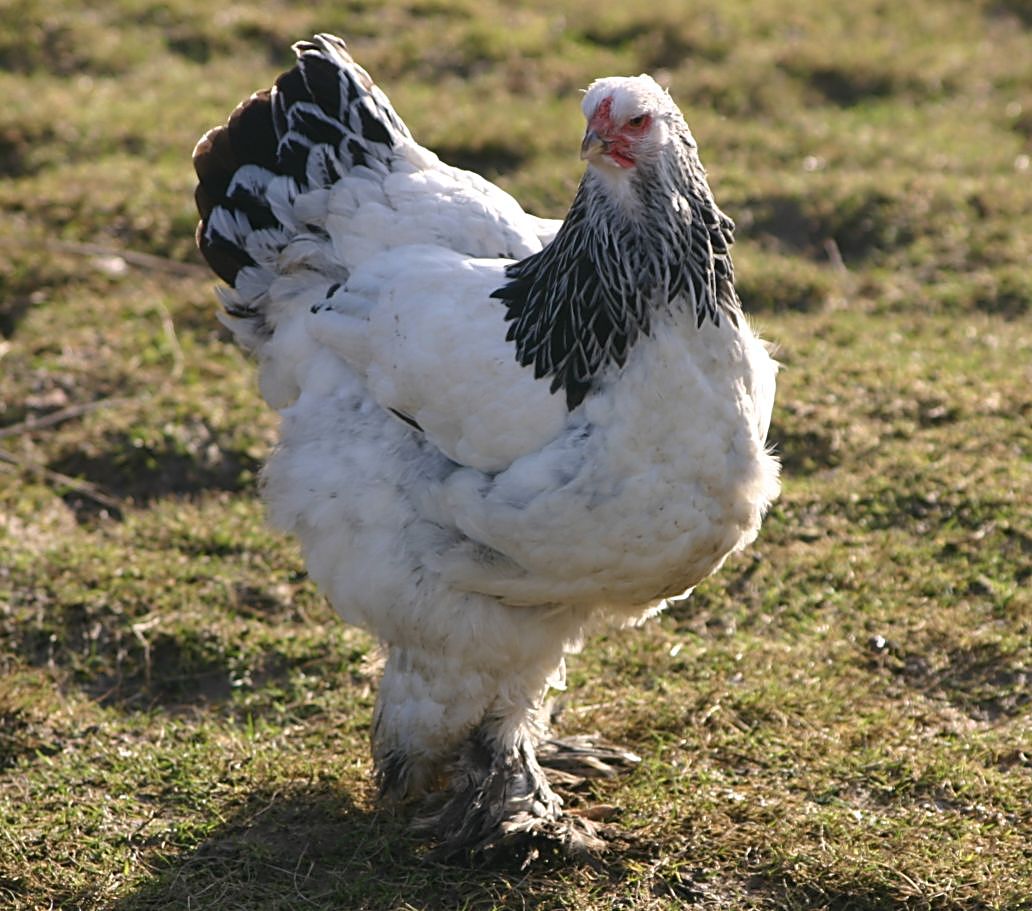
The Brahma chicken is one of the largest chicken breeds you can keep: under the American Poultry Association (APA) standard, a Light Brahma cock should weigh 12 pounds and a hen 9.5 pounds. It is a calm, feather-footed Asiatic breed that lays brown eggs through the cold months, which makes it a favorite for cold-climate backyards and for keepers who want a gentle, impressive bird.
Brahmas come in three recognized colors (Light, Dark and Buff) and in a bantam size that weighs closer to 2 pounds. This profile covers the breed’s history, looks, temperament, egg laying, care needs and how the Brahma bantam compares with the full-size bird.
Brahma Quick Facts
- Egg color
- Brown
- Eggs per year
- 150 to 200
- Egg size
- Medium
- Size class
- Large fowl and bantam
- Hen weight, standard
- 9.5 lb
- Rooster weight, standard
- 12 lb
- Hen weight, bantam
- 34 oz
- Rooster weight, bantam
- 38 oz
- Temperament
- Docile
- Cold hardiness
- High
- Heat hardiness
- Medium
- Broodiness
- Frequent
- Noise level
- Quiet
- Good for beginners
- Yes
- Confinement
- Good
- Purpose
- Dual purpose
- Start of lay
- 24 to 28 weeks
- Comb type
- Pea
- Feathered feet
- Yes
- Crest
- No
- Origin
- United States, from Chinese stock imported through Shanghai
- APA / ABA recognition
- APA: Asiatic class; ABA: Feather Legged
- Conservation status
- Not listed (graduated from the priority list in 2023)
- Lifespan
- 5 to 8 years
History and Origin
The Brahma was developed in the United States from very large, feather-legged fowl that arrived through the port of Shanghai after China opened its ports to trade in 1843. According to The Livestock Conservancy, Chittagong fowl from what is now Bangladesh also contributed, especially to the head and comb, which helped separate the Brahma from the Shanghai birds that became the Cochin. Oklahoma State University notes that most of the breed’s development took place in America between 1850 and 1890, and that the name comes from the Brahmaputra River.
The breed went by at least a dozen names in its early years until the publisher T.B. Miner shortened it to “Brahma” around 1853 or 1854. Brahmas and Cochins fueled the “Hen Fever” poultry craze of the 1850s, helped along when breeder George Burnham sent nine Light Brahmas to Queen Victoria in December 1852. From the mid-1850s to about 1930, the Brahma was considered the leading American meat breed.
The Light and Dark varieties were included in the first American Standard of Perfection in 1874, and the Buff followed in 1924. Commercial broilers eventually replaced the Brahma as a meat bird, and the breed spent years on The Livestock Conservancy’s priority list before graduating from it in 2023.
Appearance and Varieties
A Brahma looks even bigger than it is, thanks to dense, fluffy plumage and a tall, upright stance. It has a small pea comb, a broad head with a slight overhanging brow, and yellow shanks and toes covered in feathers. The pea comb sits close to the head, which is one reason the breed handles freezing weather so well.
Light, Dark and Buff Brahmas
The Light Brahma is the most common: a white body with a black-striped hackle (neck) and black in the tail and wing tips. The Buff Brahma has the same Columbian-style pattern with golden buff replacing the white. The Dark Brahma differs between the sexes. Hens are steel gray with fine dark penciling, while roosters are silvery white on top with a black breast and body. The Livestock Conservancy notes the Dark variety runs about a pound lighter than the Light.
| Variety | Standard Cock | Standard Hen | Bantam Cock | Bantam Hen |
|---|---|---|---|---|
| Light | 12 lb | 9.5 lb | 38 oz | 34 oz |
| Dark | 11 lb | 8.5 lb | 38 oz | 34 oz |
| Buff | 11 lb | 8.5 lb | 38 oz | 34 oz |
Standard weights in the table follow the APA figures published by Oklahoma State University and the University of Wisconsin Extension. Bantam weights reflect the standard figures listed by hatcheries for Brahma bantams. Individual birds vary, and many hatchery-bred Brahmas come in under the standard.
Feathered Feet
The feathered feet are the Brahma’s signature, but they come with upkeep. Mud and wet bedding cling to the foot feathers, and soaked feathers in winter can leave the toes prone to frostbite. Dry footing, clean bedding and a quick check of the feet during routine handling go a long way.
Temperament
Brahmas are famously calm. Murray McMurray Hatchery describes Light Brahmas as exceptionally quiet, gentle and easy to handle, and The Livestock Conservancy calls the breed docile and not flighty or skittish. Most birds tolerate being picked up, and they rarely bully other breeds.
Their size is the main caution. A 12-pound rooster can knock over a small child simply by moving around, even if he means no harm, so supervise young kids in the run. Because they are slow and heavy, Brahmas also tend to sit at the bottom of the pecking order with fast, flighty breeds, but they usually hold their own through bulk alone.
Egg Laying
A Brahma hen typically lays 150 to 200 brown eggs a year, with The Livestock Conservancy putting the upper end at about 200. Eggs are usually medium to large. That is a modest total next to a production layer, but the Brahma’s timing is its strength: the Conservancy describes Brahmas as superior winter layers that produce most of their eggs from October to May.
Brahmas mature slowly. Most pullets start laying at around 6 to 7 months, later than lighter breeds, and big birds keep filling out until they are close to 2 years old. Hens are also likely to go broody, and McMurray rates them as good mothers. If you do not want chicks, collect eggs daily and be ready to break a broody spell.
Care Needs
Brahmas thrive in cold weather. Their pea comb, heavy feathering and size make them very cold hardy, and frostbite research from the Cooperative Extension poultry network notes that small pea combs have much lower frostbite rates than large single combs. Good ventilation and dry bedding still matter, because moisture, not cold alone, is what drives frostbite.
Heat is harder on them. Dense feathering holds warmth close to the body, so in hot summers give Brahmas deep shade, airflow and cool water, and watch for panting with wings held away from the body. Heat stress can set in once temperatures climb into the 80s and 90s °F, especially in humid weather.
Space is the other big consideration. Plan on more room than you would give an average breed: wide pop doors, a roomy coop, and low, wide roosts (12 to 18 inches off the ground works well) so heavy birds do not injure their legs jumping down. Brahmas do not fly much, so a low fence will often contain them. They eat more feed than smaller breeds, so budget for that.
Keep an eye on foot health and on external parasites, which can hide in thick leg feathers. For any limping, swelling or persistent health problem, see a veterinarian with poultry experience.
Bantam vs Standard Brahma
The Brahma bantam is a true miniature of the large fowl, with the same pea comb, feathered feet and three color varieties. Hatchery listings give mature bantam weights of about 38 ounces for males and 34 ounces for females, compared with 12 and 9.5 pounds for standard Light Brahmas. That makes a bantam roughly one-quarter to one-fifth the size of the full-size bird.
Bantam Brahmas lay small eggs, often listed at about 100 a year, and they tend to go broody. In return, they need a fraction of the coop space and feed, and their calm nature makes them one of the better bantam choices for families and small yards. If you love the Brahma look but do not have room for 12-pound birds, the bantam is the practical answer.
Who the Brahma Suits
The Brahma suits keepers in cold climates who want a gentle, quiet bird and do not need maximum egg numbers. It is a good fit for beginners and families, for people who want a showpiece in the yard, and for anyone who wants eggs in winter when lighter breeds slow down. The breed also tolerates confinement well, which helps in suburban setups.
It is a weaker fit for hot, humid regions, for very muddy runs, and for anyone who needs high production on a tight feed budget. In small yards, the bantam often makes more sense than the standard size.
Where to Buy Brahma Chicks
Light Brahmas are widely sold by major hatcheries, and Dark and Buff varieties are common too, usually as straight run or sexed day-old chicks in spring. Brahma bantams are carried by several hatcheries that specialize in bantams. Farm stores often stock Light Brahma chicks during the spring chick season.
If you want birds that match the APA standard in size and type, look for a breeder who shows Brahmas or belongs to a breed club, since hatchery birds are bred for general backyard use and often run smaller. Whatever the source, ask about vaccination status and check that chicks are active and their feet are clean.
Frequently Asked Questions
Quick answers to common questions about Brahma chickens.
How Long Do Brahma Chickens Live?
A Brahma chicken typically lives 5 to 8 years. Dry footing for its feathered feet, low roosts that protect its heavy legs and shade in hot weather help a Brahma stay healthy through that span.
How Long Does It Take a Brahma Chicken to Mature?
A Brahma chicken takes about 2 years to reach full size. Pullets usually start laying at around 24 to 28 weeks, or 6 to 7 months, which is later than lighter breeds, and they keep filling out for more than a year after that.
How Can You Tell If a Brahma Chick Is a Rooster?
Most Brahma chicks cannot be sexed reliably at hatch without a trained vent sexer. By about 3 months, a Brahma cockerel shows long, pointed saddle feathers in front of the tail, and most roosters start crowing at around 4 to 5 months.
Can You Eat Brahma Chicken?
Yes, the Brahma is a dual-purpose breed and was the leading American meat chicken from the mid-1850s to about 1930. Brahmas grow slowly compared with modern broilers, though, so raising them for the table takes far longer.
Sources (7)
Breed facts and figures on this page were checked against these references.
- The Livestock Conservancy: Brahma Chicken
- Oklahoma State University: Breeds of Livestock, Brahma Chickens
- Murray McMurray Hatchery: Light Brahmas
- Ideal Poultry: Light Brahma Bantam
- Cooperative Extension Small and Backyard Poultry: Frostbite in Chickens
- My Pet Chicken: How Can I Tell if My Juvenile Bird Is a Rooster?
- Mississippi State University Extension: Sexing of Day-Old Chicks
 Polish Chicken
 Sussex Chicken
 Lavender Orpington
 Easter Egger Chicken