
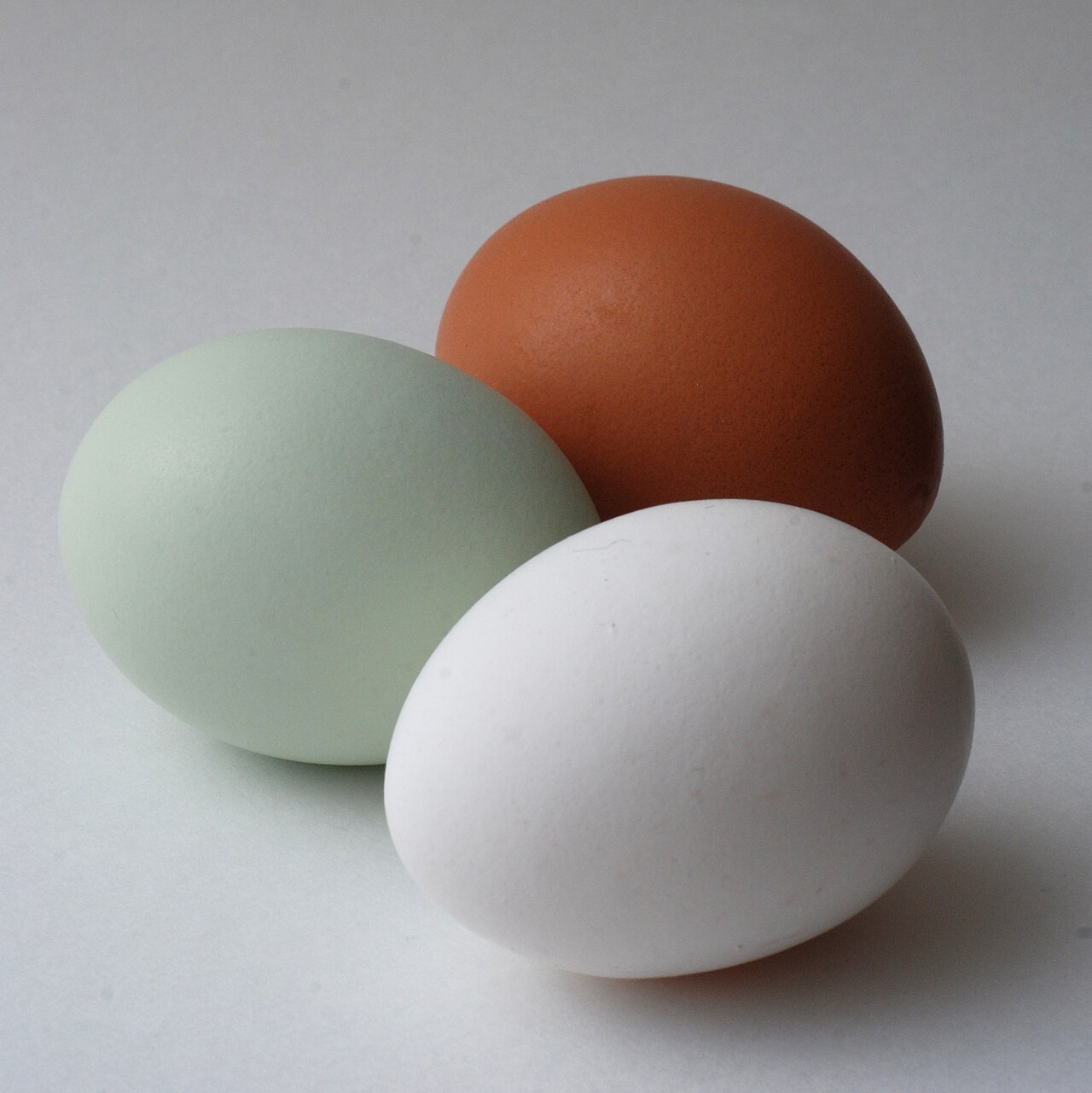
An Easter Egger chicken is a mixed-breed hen that carries the gene for blue eggshells, so she lays blue, green or olive eggs, typically 200 to 250 a year. It is a hybrid, not a recognized breed: the American Poultry Association has no standard for it, and no two Easter Eggers look exactly alike.
Easter Eggers are often sold as “Ameraucanas” or “Araucanas,” but those are separate, standardized breeds. This profile explains the difference, along with the Easter Egger’s history, looks, temperament, egg laying, care and bantam options.
Easter Egger Quick Facts
- Egg color
- Blue, Green, Olive
- Eggs per year
- 200 to 250
- Egg size
- Large
- Size class
- Large fowl and bantam
- Hen weight, standard
- 4 to 5 lb
- Rooster weight, standard
- 5 lb
- Temperament
- Friendly
- Cold hardiness
- High
- Heat hardiness
- High
- Broodiness
- Rare
- Noise level
- Moderate
- Good for beginners
- Yes
- Confinement
- Good
- Purpose
- Eggs, Pet
- Start of lay
- 18 to 24 weeks
- Comb type
- Pea (usually)
- Feathered feet
- No
- Crest
- No
- Origin
- United States, from crosses with blue-egg breeds
- APA / ABA recognition
- Not recognized (hybrid)
- Conservation status
- Not listed
- Lifespan
- 6 to 8 years
History and Origin
The story starts with the blue-egg chickens of Chile, associated with the Araucanian (Mapuche) people. Birds descended from these South American fowl reached the United States by the 1930s, and American breeders crossed them with other chickens. Some breeders worked those crosses into standardized breeds, while many more stayed as colorful mixed flocks that laid tinted eggs.
The APA accepted the Araucana as a breed in 1976 and the Ameraucana in 1984, according to the Ameraucana Alliance. Birds that carry the blue-egg gene but do not meet either standard became known as Easter Eggers, a name that points to the pastel egg colors. Hatcheries now produce Easter Eggers in large numbers, often from their own long-kept lines, and the Wisconsin 4-H breed guide notes that many hatcheries sell Ameraucanas and Easter Eggers under the same label.
Appearance and Varieties
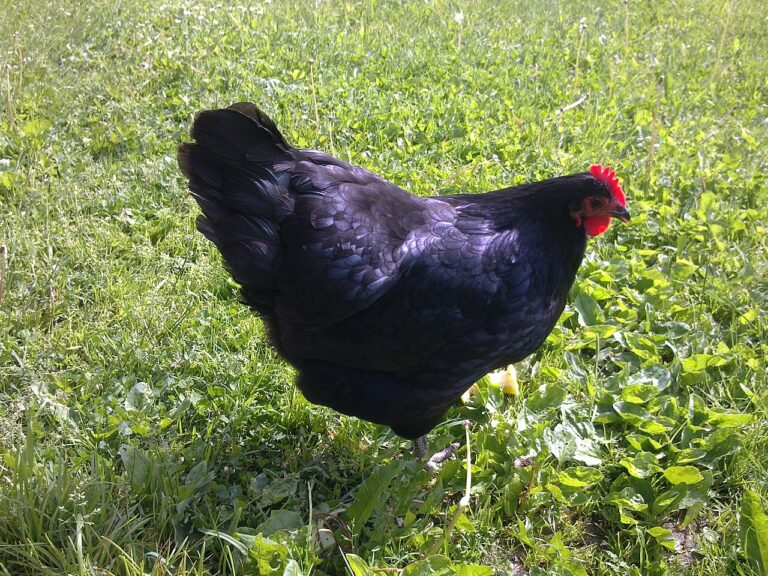
Because they are mixed, Easter Eggers vary widely. Plumage can be almost any color or pattern, from black or white to wheaten, partridge or a patchwork of shades. Most have a pea comb, and many have a beard and muffs (fluffy facial feathers). Leg color ranges from green or willow to slate, gray or yellow, and the birds have clean legs and four toes.
There are no official varieties, since there is no standard. A flock of Easter Eggers from the same hatchery order can look like six different breeds, which many keepers count as part of the fun. Hatchery listings put mature hens at about 4 to 5 pounds and roosters around 5 pounds, which is lighter than most dual-purpose breeds.
Easter Egger vs Ameraucana vs Araucana
The quickest way to tell them apart is by tail and face. The Ameraucana Alliance explains that an Araucana has ear tufts and is rumpless (no tail), while an Ameraucana has muffs and a tail, and an Easter Egger is “not a recognized breed, but rather a mixed breed bird that possesses the gene for blue eggs.”
| Feature | Easter Egger | Ameraucana | Araucana |
|---|---|---|---|
| Status | Hybrid, not recognized | APA recognized 1984 | APA recognized 1976 |
| Egg color | Blue, green, olive, sometimes pinkish | Blue only | Blue (turquoise) only |
| Tail | Yes | Yes | None (rumpless) |
| Face | Often beard and muffs, sometimes clean | Beard and muffs | Ear tufts |
| Comb | Usually pea | Pea | Pea |
| Colors | Any color or pattern | Set standard varieties | Set standard varieties |
| Where to buy | Most hatcheries and farm stores | Mainly breeders | Mainly breeders |
In short, if a hatchery chick is priced like a common layer and the listing mentions green or olive eggs, it is almost certainly an Easter Egger. My Pet Chicken notes that true Ameraucanas and Araucanas are generally available only through breeders.
Temperament
Easter Eggers have a well-earned reputation as friendly, easygoing hens. My Pet Chicken describes them as exceptionally friendly and usually good with children, and Meyer Hatchery calls its Easter Eggers extremely docile. They tend to be curious, alert and active foragers without being flighty.
Because they are mixed, personality varies more than in a standardized breed. Most hens are sweet, while roosters range from mellow to pushy. If you want a calm flock for kids, start with sexed pullets and handle them often as chicks.
Egg Laying
Most Easter Egger hens lay 200 to 250 eggs a year, or about four to five eggs a week in their prime. Meyer Hatchery lists 4 to 6 eggs a week and My Pet Chicken about 4. Eggs are large to extra large, which is impressive for a fairly light bird.
Each hen lays one shell color for life, set by her genetics. Hens that inherit the blue-egg gene with no brown overlay lay blue or aqua eggs. When brown pigment is layered over blue, the result is green or olive. Occasionally a hen lays a pinkish or tan egg, which usually means she did not inherit the blue-egg gene. You cannot reliably predict a chick’s egg color, so you find out when she starts laying, typically at about 18 to 24 weeks. Easter Eggers are rarely broody.
Care Needs
Easter Eggers are hardy, low-maintenance birds. Their pea combs resist frostbite, and hatchery sources rate them as tolerant of both cold and heat. They do well free ranging or in a secure run, and their moderate size means they need no special coop setup.
Plan on about 4 square feet of coop space per bird and 8 to 10 square feet in the run, a complete layer feed once they start laying, and oyster shell on the side for strong shells. Birds with beards and muffs can get damp, crusty face feathers from waterers, so a nipple or cup waterer keeps them cleaner.
Easter Eggers have no breed-specific health problems of note, but routine checks for mites, lice and changes in behavior still matter. For any bird that seems sick or injured, see a veterinarian with poultry experience.
Bantam vs Standard Easter Egger
Bantam Easter Eggers are sold by several hatcheries, and they are small, colorful versions of the full-size bird. Because Easter Eggers have no APA or ABA standard, there is no official bantam weight. Bantams generally run a fraction of the large fowl’s 4 to 5 pounds, and they lay small blue, green or olive eggs.
The bantam’s appeal is the same as the large fowl’s: friendly birds and colorful eggs, now with less feed and coop space. If you share a small yard or want a mixed egg basket from a mini flock, bantam Easter Eggers are worth a look. Do not expect them to breed true or match a size chart.
Who the Easter Egger Suits
The Easter Egger suits beginners, families and anyone who wants a colorful egg basket without the price or wait of breeder stock. It handles a wide range of climates, adapts to confinement and usually gets along well with other hens.
It is not the right choice if you want to show your birds, breed to a standard, or know exactly what color egg each chick will lay. For those goals, buy purebred Ameraucanas or Araucanas from a reputable breeder.
Where to Buy Easter Egger Chicks
Easter Egger chicks are among the most widely available chicks in the country. Most major hatcheries sell them as sexed pullets or straight run, and farm stores stock them every spring, sometimes labeled “Ameraucana” or “Americana.” Several hatcheries also offer bantam Easter Eggers and specialty lines selected for particular egg shades.
If the label matters to you, read the listing closely. A chick sold as an Ameraucana at a farm-store price is almost always an Easter Egger. For true Ameraucanas or Araucanas, contact breeders through the breed clubs.
Sources (5)
Breed facts and figures on this page were checked against these references.
 Polish Chicken
 Sussex Chicken
 Lavender Orpington
 Australorp Chicken