
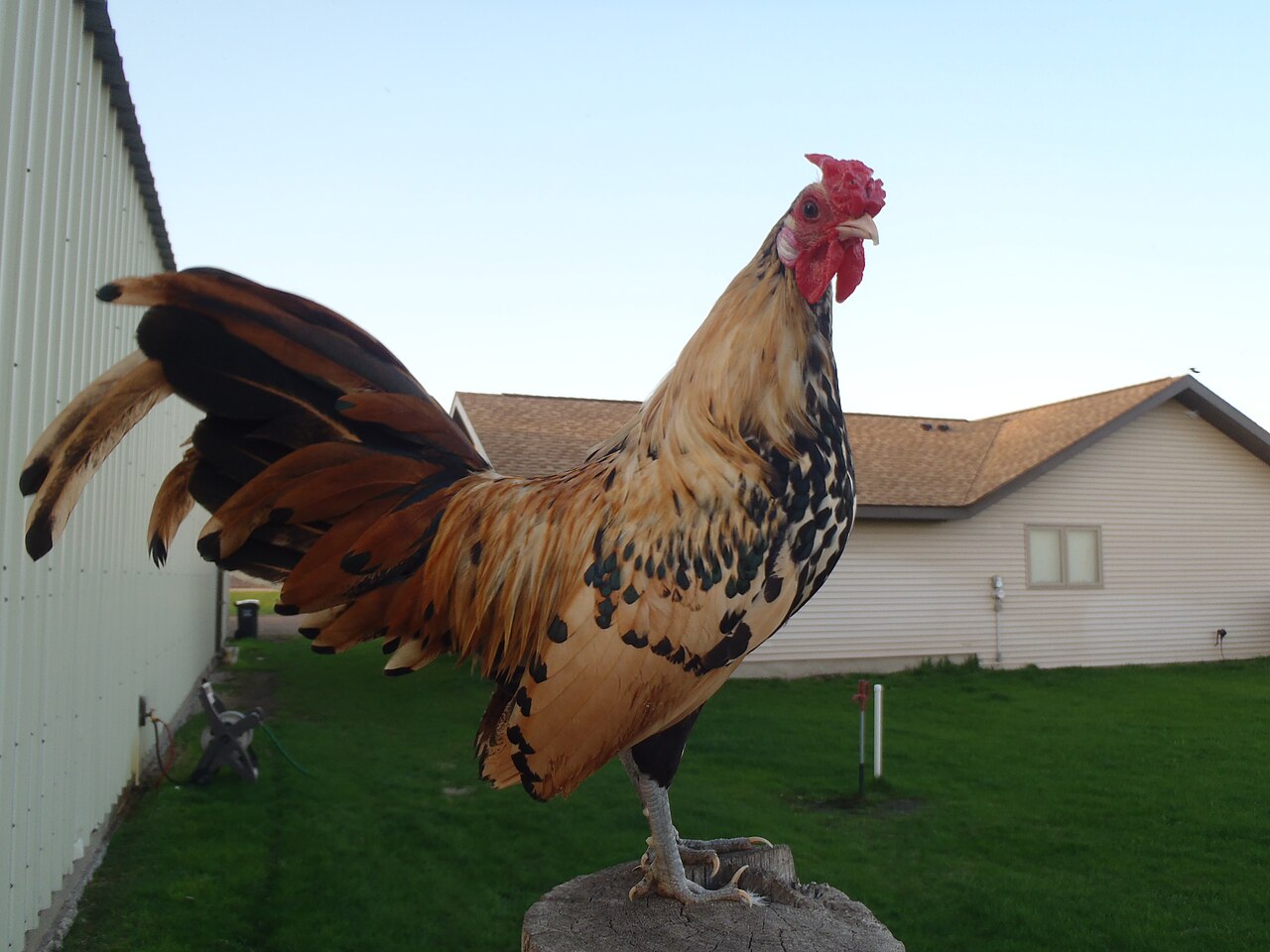
Bantam chickens are miniature chickens that weigh about one-fourth to one-fifth as much as standard (large fowl) chickens, usually 16 to 30 ounces as adults. The American Bantam Association defines bantams as miniature fowl one-fifth to one-fourth the weight of the large fowl they represent, and nearly 350 breeds and varieties are now raised in bantam size.
That small size is the whole appeal. Bantams eat less, fit in smaller coops and are easy for children to handle, which makes them a natural fit for suburban yards.
What Is a Bantam Chicken?
“Bantam” describes size, not a single breed. Most bantams are scaled-down versions of standard breeds, so you can buy a Plymouth Rock, Wyandotte or Cochin in either large fowl or bantam size. A few breeds exist only as bantams. Breeders name bantams by breed and variety with “bantam” added, so a show entry reads “Buff Cochin Bantam.”
The word likely comes from Banten, a province on the Indonesian island of Java, where small native chickens were reportedly picked up by traders and shipped to Europe. Today bantams are bred mainly for color, shape and personality rather than meat or maximum egg output, although many are fair layers.
Weight is the defining measure. University of Wisconsin Extension puts adult bantams at roughly 16 to 30 ounces, while a hen of a common backyard breed such as a Rhode Island Red often weighs 5 to 8 pounds.
True Bantams vs Miniatures
Bantams fall into two groups, and the difference matters if you care about breed history or plan to show.
True Bantams
A true bantam has no large fowl counterpart. The breed was developed as a small bird from the start. Well-known true bantams include the Sebright, Japanese, Rosecomb, Dutch, Nankin, Belgian d’Uccle and Serama, along with the American Game Bantam. Sir John Sebright spent roughly 20 years developing his namesake breed around 1800, and it has never existed in a standard size.
Miniatures (Bantamized Large Fowl)
A miniature is a bantam version of a standard breed, sometimes called a bantamized breed. Cochin, Brahma, Plymouth Rock, Wyandotte, Orpington, Australorp, Rhode Island Red, Leghorn and Old English Game all come in bantam size. Breeders created these by selecting small birds over many generations, and some lines were built from unrelated small stock that was bred to match the large breed’s color and type.
Miniatures are not perfect scale models. Their heads, tails, wings, feathers and eggs tend to be proportionally larger than a straight one-fifth reduction would predict.
The American Bantam Association and Bantam Classes
The American Bantam Association (ABA) has represented bantam breeders since 1914 and publishes the Bantam Standard, the reference judges use at bantam shows. The American Poultry Association (APA) also describes bantams in its Standard of Perfection. The two books do not always match: the ABA recognizes more bantam varieties, and the groups have worked in recent years to reconcile their differences.
Both organizations sort bantams into classes by comb type, leg feathering and game type. The ABA adds a class for bantam ducks, and the APA gives Modern Game its own class apart from the other game bantams. The table below uses the APA’s class names and example breeds.
| Bantam Class | What It Covers | Example Breeds |
|---|---|---|
| Single Comb Clean Legged (SCCL) | Single comb, no leg feathers | Australorp, Dutch, Japanese, Orpington, Plymouth Rock, Sussex |
| Rose Comb Clean Legged (RCCL) | Rose comb, no leg feathers | Dominique, Hamburg, Rhode Island Red, Rosecomb, Sebright, Wyandotte |
| All Other Combs Clean Legged (AOCCL) | Pea, cushion, V-shaped and other combs, no leg feathers | Ameraucana, Araucana, Chantecler, Cornish, Polish |
| Feather Legged | Feathered shanks and feet | Brahma, Cochin, Langshan, Silkie, Sultan |
| Game | Game breeds other than Modern Game | American Game, Old English Game |
| Modern Game | Tall, upright, tight-feathered game type | Modern Game |
Popular Bantam Chicken Breeds
These are the bantam chicken breeds US keepers most often find at hatcheries and shows. Egg color and temperament are typical for each breed, and individual birds vary.
| Breed | Type | Egg Color | Temperament |
|---|---|---|---|
| Silkie | Bantam (often treated as a true bantam) | Cream or tinted | Docile, very broody |
| Sebright | True bantam | White or cream | Active, flighty |
| Japanese | True bantam | Cream or tinted | Generally calm |
| Belgian d’Uccle | True bantam | Cream or tinted | Friendly, often broody |
| Rosecomb | True bantam | White or tinted | Active |
| Serama | True bantam | Cream to light brown | Friendly |
| Cochin | Miniature | Light brown | Docile, broody |
| Old English Game | Miniature | Cream or tinted | Active; roosters combative |
| Plymouth Rock | Miniature | Light brown | Docile |
| Wyandotte | Miniature | Light brown | Calm |
| Brahma | Miniature | Light brown | Docile |
| Ameraucana | Miniature | Blue | Varies; can be flighty |
Silkie
Silkies are the best-known bantams in the US, with fluffy, hair-like plumage, dark skin, five toes and feathered feet. They are gentle, easy to hold and famously broody, which is why many keepers use them to hatch eggs from other breeds. Expect roughly 90 to 120 small cream or tinted eggs a year.
The APA places the Silkie in its Feather Legged bantam class, and nearly all Silkies sold in the US are bantam size, so many keepers treat the breed as a true bantam. Their fluffy feathers are not waterproof, so give them a dry, covered run.
Sebright
The Sebright is a true bantam with gold or silver feathers edged in black lacing. Males weigh about 22 ounces and females about 20 ounces. Hens lay roughly 60 to 80 small white or cream eggs a year and rarely go broody.
Sebrights are beautiful but not the easiest bantam for a first flock. The breed is known to be susceptible to Marek’s disease, so buy vaccinated chicks when you can, and expect active birds that fly well.
Belgian D’Uccle
The d’Uccle is a bearded, feather-footed true bantam, best known in the Mille Fleur pattern of orange-red feathers tipped with black and white spots. Hens lay small cream or tinted eggs and often go broody.
Cochin Bantam
Cochin bantams are round balls of feathers with fully feathered legs. They are docile, tolerate confinement well and go broody readily, which makes them a strong choice for families. Expect small light brown eggs in modest numbers, and keep bedding dry so foot feathers stay clean.
Old English Game Bantam
Old English Game bantams are tight-feathered, alert and among the most popular show bantams, with dozens of color varieties. Hens lay small cream or tinted eggs and make protective mothers. Roosters can be combative with other males, so most backyard flocks keep just one.
Pros and Cons of Keeping Bantams
Bantams solve some backyard problems and create others.
Advantages
Nearly every benefit follows from size.
- They eat noticeably less feed than standard chickens.
- They need about half the indoor floor space and less than half the run space of large chickens.
- They are light and easy for children to handle, which is why they are popular in 4-H.
- Many breeds, especially Silkies and Cochins, are reliable broody hens and good mothers.
- Smaller birds produce less manure to manage in a small yard.
Drawbacks
The same small size brings a few real limits.
- Eggs are small, and ornamental breeds lay fewer of them.
- Most bantams fly well, so they need a covered run or a tall fence.
- Hawks, owls and house cats can take a bird this small.
- Small bodies lose heat faster, so some breeds need extra winter care.
- Larger hens may push them away from feed and water.
For many keepers the trade is worth it. If eggs for a family are the main goal, choose bantam versions of productive breeds or add a few standard layers to the flock.
Space and Coop Needs for Bantams
Bantams need roughly half the room of standard chickens. University of Maryland Extension recommends 1 square foot of indoor space and 4 square feet of outdoor run per bantam, compared with 2 square feet inside and 10 square feet outside for each large chicken. More room is always better, so treat these figures as minimums rather than targets.
| Bird | Inside Coop (per Bird) | Outside Run (per Bird) |
|---|---|---|
| Bantam chicken | 1 sq ft | 4 sq ft |
| Laying hen (light breed) | 1.5 sq ft | 8 sq ft |
| Large chicken | 2 sq ft | 10 sq ft |
A few other details change at bantam scale. Nest boxes can be smaller, with the smallest dimension at least 9 inches. Roosts can sit lower, which helps heavily feathered breeds like Cochins and Silkies that do not fly up well. Use hardware cloth rather than chicken wire on openings, and roof the run, since most bantams fly well and hawks see them as easy prey.
Bantam Eggs: Size and How Many Equal a Large Egg
Bantam eggs are about two-thirds the size of standard eggs. University of Wisconsin Extension puts them at 15 to 20 ounces per dozen, or roughly 1.25 to 1.7 ounces each, while a USDA Large egg averages at least 24 ounces per dozen, or 2 ounces per egg.
That gives a handy kitchen rule: three bantam eggs equal about two large eggs. For the smallest bantams, such as Sebrights, whose eggs can weigh 1 to 1.25 ounces, use two bantam eggs for each large egg a recipe calls for. When a recipe depends on precision, weigh the eggs on a kitchen scale.
| Egg | Typical Weight per Egg | Weight per Dozen |
|---|---|---|
| Very small bantam (Sebright, Rosecomb) | 1 to 1.25 oz | 12 to 15 oz |
| Typical bantam | 1.25 to 1.7 oz | 15 to 20 oz |
| USDA Medium | 1.75 oz or more | 21 oz minimum |
| USDA Large | 2 oz or more | 24 oz minimum |
| USDA Extra Large | 2.25 oz or more | 27 oz minimum |
Annual output ranges widely by breed. Ornamental true bantams such as Sebrights and Japanese may lay only 50 to 100 eggs a year, Silkies about 90 to 120, and bantam versions of productive breeds such as Leghorns and Rhode Island Reds lay more often.
Keeping Bantams With Standard Chickens
You can keep bantams with standard chickens, and many backyard flocks do. The key is making sure the smaller birds can always reach feed, water and a roost. University of Minnesota Extension advises keepers of mixed flocks to consider separating birds by size or dominance, especially in winter, so lighter birds are not shut out.
Mixed flocks work best when the birds grow up together. Chicks brooded side by side sort out the pecking order early and with fewer injuries. Add a second feeder and waterer in a different spot so a bossy large hen cannot guard both, and provide low roosts and a few hiding places where a bantam can step away from trouble.
Roosters need more thought. A heavy standard rooster can injure small bantam hens when mating, so avoid that pairing. A bantam rooster with standard hens is less of a physical risk, but he will still mate with them. Calm breeds mix best: Silkies, Cochins and d’Uccles usually get along with gentle large breeds like Orpingtons and Australorps, while game bantams are better kept with birds that can hold their own.
Where to Buy Bantam Chickens
Most US keepers buy bantam chicks from mail-order hatcheries, local breeders or farm stores in spring.
Large hatcheries such as Cackle, Meyer, Murray McMurray and Stromberg’s sell dozens of bantam varieties as day-old chicks. Bantam chicks are often sold straight run (unsexed), so plan for some roosters, and check each hatchery’s minimum order. Choose a hatchery that takes part in the USDA’s National Poultry Improvement Plan (NPIP), which tests breeding flocks for certain diseases.
If you want show-quality birds, buy from a breeder. ABA and APA shows, breed clubs and county fairs are good places to meet breeders and see adult birds before you buy.
Before you order, confirm that your city and homeowners association allow chickens and roosters. Bantam roosters crow just like large ones, so a hen-only flock is the safer choice in close neighborhoods.
Frequently Asked Questions
Quick answers to common questions about bantam chickens.
When Do Bantam Chickens Start Laying Eggs?
Bantam chickens usually start laying later than their small size suggests, at about 6 months for tight-feathered breeds and 9 months or more for loose-feathered breeds such as Silkies and Cochin bantams. Game bantams and many clean-legged bantams tend to begin first.
How Long Do Bantam Eggs Take to Hatch?
Bantam eggs take 21 days to hatch, the same as standard chicken eggs. Season, incubator conditions and strain can shift hatching by about one day either way, so a bantam hatch can start on day 20 or finish on day 22.
Can Bantam Chickens Fly?
Yes, most bantam chickens fly well, far better than heavy standard breeds, and active breeds such as Sebrights and Old English Game bantams clear ordinary fences easily. A roofed or netted run keeps bantams in and also protects them from hawks and owls.
Can Bantam Chickens Survive Winter?
Yes, bantam chickens can get through cold winters in a dry, well-ventilated coop, but their small bodies lose heat faster than large hens, so they need more protection. Keep water from freezing, block drafts at roost height, and make sure larger birds do not crowd bantams away from feed.
Are Bantam Chickens Good Egg Layers?
Bantam chickens are modest egg layers, with ornamental true bantams such as Sebrights laying about 50 to 100 small eggs a year and Silkies about 90 to 120. Bantam versions of productive breeds such as Leghorns and Rhode Island Reds lay more often, though their eggs stay small.
Sources (6)
Facts on this page were checked against these references.
- University of Wisconsin Extension (North Central Regional Extension Publication 209): Bantams
- Cackle Hatchery: What Is a Standard Chicken Breed?
- Cackle Hatchery: What Is a Bantam Chicken?
- American Poultry Association: Accepted Breeds and Varieties
- University of Maryland Extension: Raising Your Home Chicken Flock (EB-409)
- University of Minnesota Extension: Caring for Chickens in Cold Weather
 Best Chicken Breeds for Beginners
 Bantam vs Standard Chickens
 Can You Keep Chickens in City Limits?