
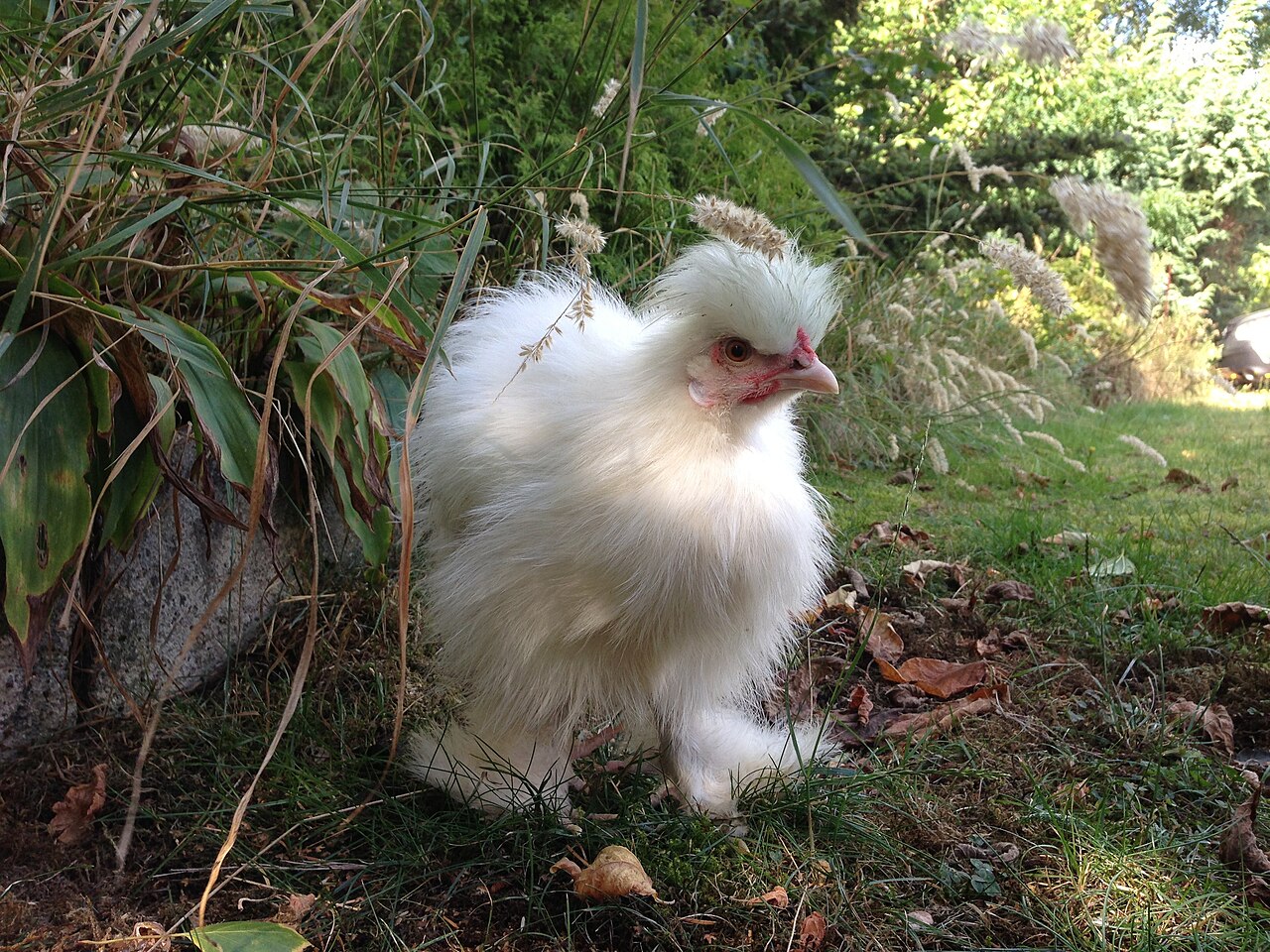
The Silkie chicken is a small, fluffy ornamental breed known for fur-like feathers, black skin, five toes on each foot and a famously calm, broody nature. In the United States it is shown as a bantam, with standard weights of about 36 ounces for a cock and 32 ounces for a hen, and hens lay roughly 90 to 120 small cream or tinted eggs a year.
Silkies are one of the most popular backyard breeds in the country, and for good reason. They are gentle with children, easy to handle and happy in a small coop. They are not egg machines, and their unusual feathers bring a few care quirks, so it pays to know what you are getting before you order chicks.
Silkie Quick Facts
- Egg color
- Cream, Tinted
- Eggs per year
- 90 to 120
- Egg size
- Small
- Size class
- True bantam
- Hen weight, bantam
- 32 oz
- Rooster weight, bantam
- 36 oz
- Temperament
- Docile
- Cold hardiness
- Medium
- Heat hardiness
- Medium
- Broodiness
- Frequent
- Noise level
- Quiet
- Good for beginners
- Yes
- Confinement
- Good
- Purpose
- Ornamental, Pet
- Start of lay
- 28 to 36 weeks
- Comb type
- Walnut
- Feathered feet
- Yes
- Crest
- Yes
- Origin
- China (Asia)
- APA / ABA recognition
- APA: Feather Legged Bantam class (1874); ABA: Feather Legged
- Conservation status
- Not listed
- Lifespan
- 7 to 9 years
History and Origin
The Silkie comes from Asia, most likely China, although some accounts point to Japan or India and the exact origin is unknown. Marco Polo described a chicken with fur instead of feathers during his travels through China in the 13th century, which is often cited as the earliest written reference to a Silkie-type bird.
The breed reached the West through trade and was admitted to the American Poultry Association’s Standard of Perfection in 1874, with White as the first recognized variety. In the United States the Silkie sits in the Feather Legged class of bantams, alongside bantam Cochins and Brahmas. Britain treats it differently: the Poultry Club of Great Britain recognizes both a large fowl Silkie and a smaller bantam version.
Appearance and Varieties
A Silkie looks like no other chicken. Its feathers lack the tiny hooks (barbicels) that zip a normal feather’s barbs together, so the plumage stays loose and soft, like down or fur. The same trait means a Silkie cannot fly, which is handy if you want birds that stay put behind a low fence.
Distinctive Traits
Under the fluff, the breed has several features that judges look for. The skin, comb, wattles, face and even the bones are dark, close to black, because of a dominant pigment gene called fibromelanosis. Each foot has five toes instead of four, and the feet and outer toes are feathered. The head carries a rounded crest, the comb is a small walnut type, and the earlobes are a turquoise blue.
Silkies come in bearded and non-bearded forms. Bearded birds have a muff of feathers around the face that gives them an owlish look, while non-bearded birds show more of their dark face and wattles.
Recognized Colors
The APA’s accepted list for the Silkie bantam includes the colors below, most in both bearded and non-bearded forms. Hatcheries also sell colors such as splash, paint and cuckoo that are popular with backyard keepers but are not all accepted for showing.
| APA Silkie Variety | Bearded | Non-Bearded |
|---|---|---|
| White | Yes | Yes |
| Black | Yes | Yes |
| Blue | Yes | Yes |
| Buff | Yes | Yes |
| Gray | Yes | Yes |
| Partridge | Yes | Yes |
| Self Blue | Yes | No |
| Splash | Yes | No |
Temperament
Silkies are about as docile as chickens get. Most tolerate handling well, rarely peck, and settle quickly into a routine, which is why they are a favorite for families with young children and for 4-H showmanship. Hatcheries routinely describe them as calm, sweet and affectionate.
That gentle nature has a downside in a mixed flock. Silkies are low in the pecking order and can be bullied by larger, pushier breeds. Their crest also limits their vision, so they may startle when approached from above. Keep them with other calm bantams or docile large breeds, and speak as you approach so they know you are coming.
Roosters are usually mild by rooster standards, although any male can become protective during breeding season. Their crow is softer than that of most large breeds, but it is still a crow, so check your local ordinances before keeping one.
Egg Laying
A Silkie hen typically lays about 90 to 120 small eggs a year. Meyer Hatchery puts the figure at around 120, and Cackle Hatchery describes them as steady layers of a few small eggs a week. The shells are cream or lightly tinted, and three Silkie eggs roughly equal two large grocery-store eggs in a recipe.
The real limit on production is broodiness. Silkie hens go broody often, sometimes several times a season, and stop laying while they sit. Many keepers value this trait: Silkies are famous as foster mothers and will hatch eggs from other breeds, ducks and even game birds. If you want eggs rather than chicks, collect eggs daily and gently break up a broody spell early.
Pullets are often slow to start, with first eggs commonly arriving somewhere around 28 to 36 weeks of age. Production also drops noticeably as hens get older, which is normal for the breed.
Care Needs
Silkies are easy keepers in most ways, but their feathers change a few routines. Because the plumage is not water resistant, a wet Silkie gets soaked to the skin and chills quickly. Give them a covered run, a dry coop with good ventilation, and shelter from cold rain. In the snow, a dry, draft-free coop matters more than added heat.
Housing and Space
Since Silkies cannot fly, they do not need tall fences, and low roosts or simply a deep bed of clean shavings suit them well. Many Silkies prefer to sleep on the floor or in a nest box, so fit roll-out nest boxes or clear the boxes at night if that becomes a hygiene problem. As bantams, they need less floor space and feed than large fowl, which makes them a good fit for small suburban yards.
Health and Grooming
Check the crest and foot feathering regularly for mites, lice and caked mud, and trim feathers around the eyes if they block vision. Silkies have a reputation for susceptibility to Marek’s disease, so order chicks vaccinated against it when your hatchery offers the option. For lameness, breathing trouble, or any bird that stops eating, contact a veterinarian who treats poultry.
Is There a Large Silkie?
In the United States, no. The APA describes the Silkie as a true bantam with no recognized large fowl version, and its accepted breeds list places every Silkie variety in the bantam Feather Legged class. The American Bantam Association also shows the Silkie as a feather legged bantam. So whether you see “Silkie chicken” or “Silkie bantam” on a hatchery page in the US, you are looking at the same bird.
The confusion comes from Britain and from hatchery size variation. The Poultry Club of Great Britain does recognize a large fowl Silkie, and its standard weights are much heavier than the bantam’s. Some US hatcheries also sell larger, often non-bearded Silkie strains raised for the table, which can reach 3 to 5 pounds live, but these are not a separate American show class.
| Silkie Type | Male | Female |
|---|---|---|
| US bantam (APA standard) | 36 oz (cock), 32 oz (cockerel) | 32 oz (hen), 28 oz (pullet) |
| UK large fowl (PCGB) | 1.81 kg (about 4 lb) | 1.36 kg (about 3 lb) |
| UK bantam (PCGB) | 600 g (about 21 oz) | 500 g (about 18 oz) |
At 32 to 36 ounces, the American Silkie is heavy for a bantam. It is still small enough to hold comfortably in one arm, and it eats far less than a standard-size laying hen.
Who the Silkie Suits
The Silkie is a strong choice if you want a friendly pet chicken, have young children, keep a small yard, or want a reliable broody hen to hatch eggs. It is also a good first show bird, since the breed is common at poultry shows and easy to handle on the table.
It is a poor fit if eggs are your main goal, if your climate is wet for long stretches and you cannot provide a covered run, or if your existing flock includes aggressive large breeds. Pair Silkies with layers such as Orpingtons or Australorps if you want both fluffy pets and a steady supply of eggs.
Where to Buy Silkie Chicks
Silkie chicks are easy to find. Major hatcheries such as Cackle Hatchery, Meyer Hatchery and Murray McMurray sell them in several colors each spring, typically shipping from late winter through summer. Hatchery birds are fine pets but vary in type and are usually sold straight run, meaning you will likely get some roosters.
For show-quality birds or specific colors, look for breeders through the American Silkie Bantam Club, the American Bantam Association, or local poultry shows. Whatever the source, buy from flocks that take part in the National Poultry Improvement Plan (NPIP) and ask whether chicks are vaccinated for Marek’s disease.
Keep in mind that sexing young Silkies is notoriously difficult. Many keepers do not know for certain whether a bird is a hen or a rooster until it lays an egg or crows, so plan for the possibility of an extra male.
Frequently Asked Questions
Quick answers to common questions about Silkie chickens.
How Long Does a Silkie Chicken Live?
A Silkie chicken typically lives 7 to 9 years. Good housing, protection from predators and from cold rain, and vaccination against Marek’s disease all help a Silkie reach the upper end of that range, although egg laying slows well before the end of its life.
Can You Eat Silkie Chicken Eggs?
Yes, Silkie eggs are ordinary, edible chicken eggs with cream or lightly tinted shells. They are small, so about three Silkie eggs equal two large grocery-store eggs in a recipe, and a hen lays roughly 90 to 120 of them a year.
Why Is Silkie Chicken Meat Black?
Silkie meat looks dark because of fibromelanosis, a dominant pigment gene that darkens the Silkie’s skin, connective tissue, bones and organs, not just its face and comb. The same mutation is shared by other black-skinned breeds such as the Ayam Cemani.
How Can You Tell a Male Silkie from a Female?
Male Silkies usually grow a larger walnut comb and long, swept-back streamer feathers at the back of the crest, while hens keep a rounder, puffier crest. Because these signs are subtle, many keepers only know for sure when a Silkie crows, often around 4 to 5 months, or lays an egg.
Sources (7)
Breed facts and figures on this page were checked against these references.
- American Poultry Association: Silkies: What Makes a Champion
- Oklahoma State University Breeds of Livestock: Silkie Bantam Chickens
- Kansas State University 4-H: American Poultry Association Accepted Breeds and Varieties (2021)
- Cackle Hatchery: White Silkie Bantam
- Meyer Hatchery: Silkie Bantams
- National Geographic: This Chicken Has Black Bones, Organs, and Meat: Here’s Why
- My Pet Chicken: How Can I Tell if My Juvenile Bird Is a Rooster?
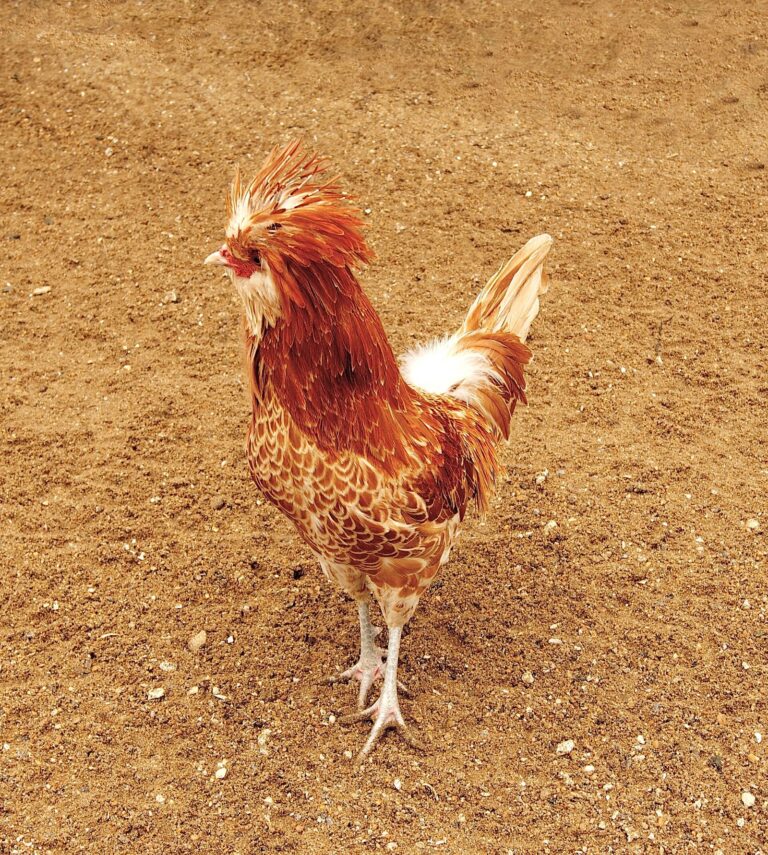 Polish Chicken
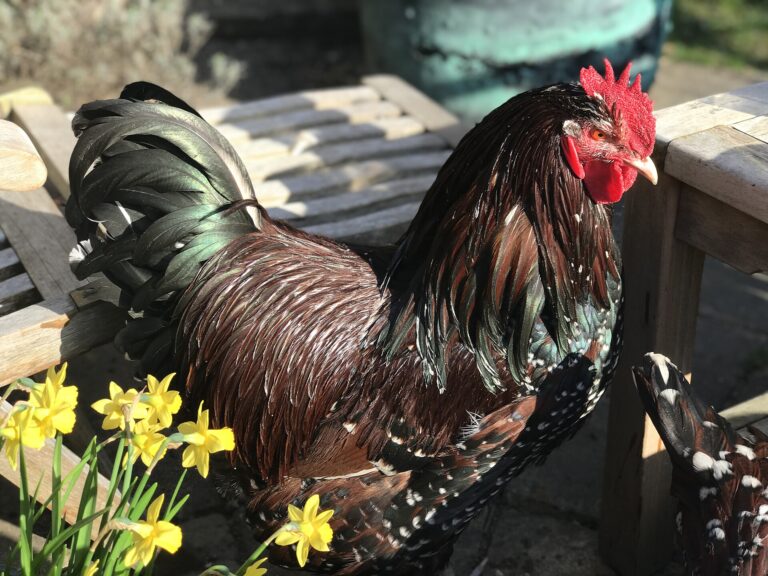 Sussex Chicken
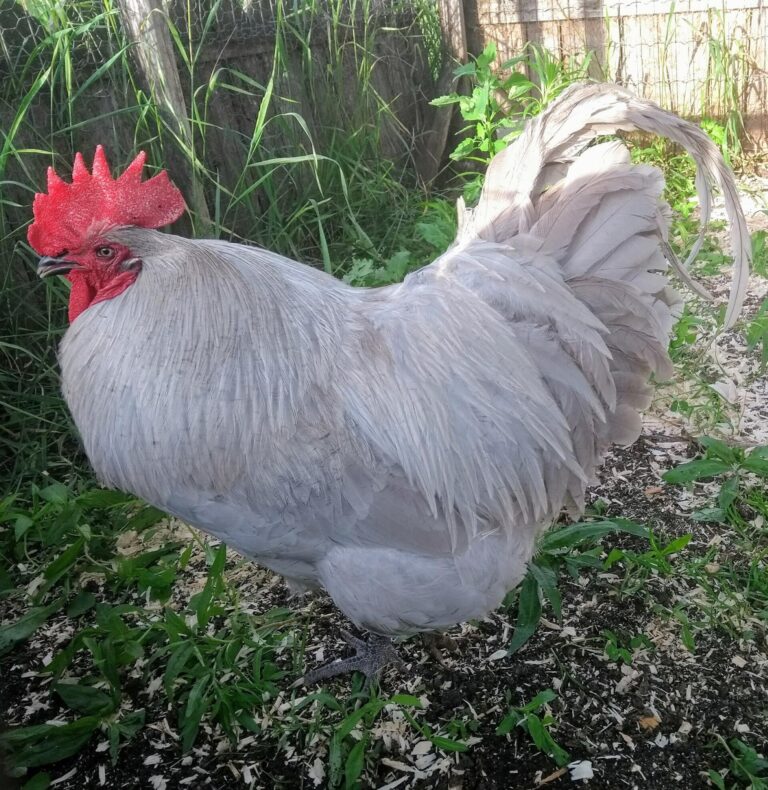 Lavender Orpington
 Easter Egger Chicken