
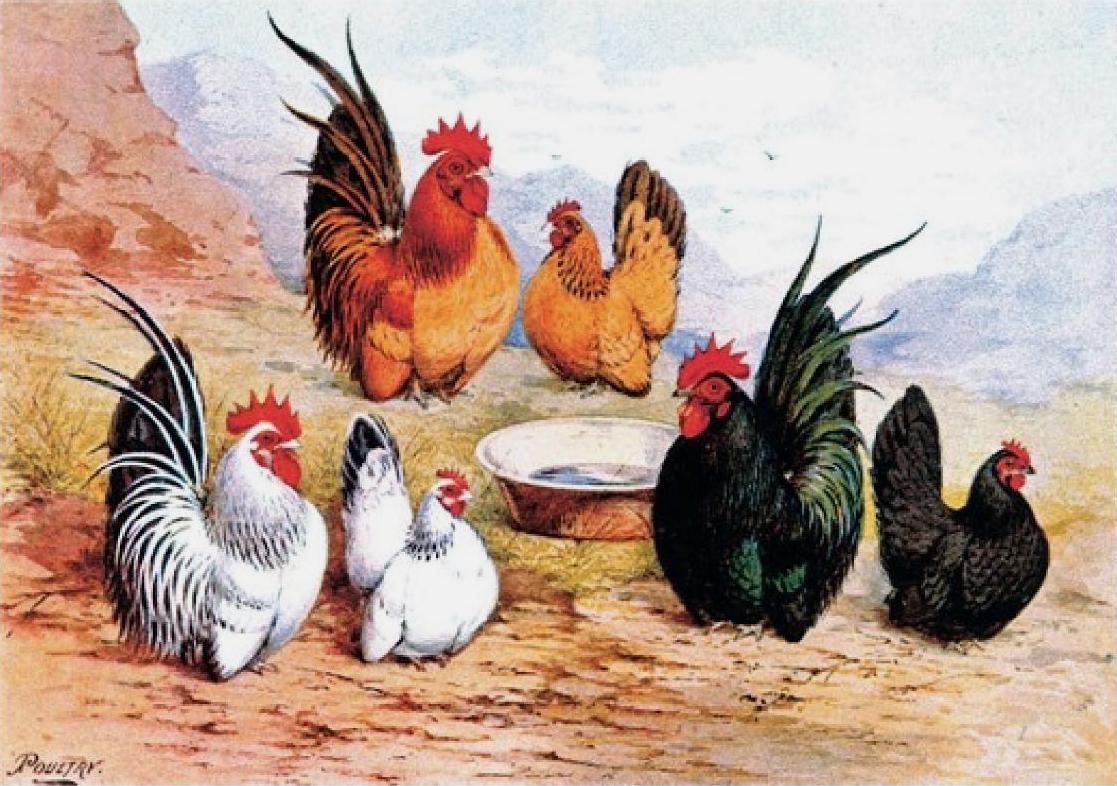
The Japanese Bantam, called Chabo in Japan, is an ancient true bantam known for its extremely short legs, oversized single comb and tall tail carried upright, slightly forward of vertical. APA standard weights are 26 ounces for a cock and 22 ounces for a hen, and the short legs come from a creeper gene that kills about 25 percent of embryos when two short-legged birds are mated.
It is a charming ornamental bird for small yards and a classic on the show circuit. Hens lay small cream eggs and make excellent broodies, but the breed is not cold hardy and is not the right pick for keepers who want eggs or easy hatching.
Japanese Bantam Quick Facts
- Egg color
- Cream, Tinted
- Eggs per year
- 50 to 100
- Egg size
- Small
- Size class
- True bantam
- Hen weight, bantam
- 22 oz
- Rooster weight, bantam
- 26 oz
- Temperament
- Active
- Cold hardiness
- Low
- Heat hardiness
- Medium
- Broodiness
- Frequent
- Noise level
- Moderate
- Good for beginners
- No
- Confinement
- Good
- Purpose
- Ornamental, Pet
- Start of lay
- 20 to 26 weeks
- Comb type
- Single
- Feathered feet
- No
- Crest
- No
- Origin
- Southeast Asia, developed in Japan
- APA / ABA recognition
- APA: Single Comb Clean Legged Bantam; ABA: Single Comb Clean Legged
- Conservation status
- Threatened
- Lifespan
- 7 to 9 years
History and Origin
The Japanese Bantam is one of the oldest recorded true bantam breeds. The Livestock Conservancy notes that birds resembling it appear in Japanese art and embroidery from the 1600s, and that its ancestors likely came from Southeast Asia. Its Japanese name, Chabo, is thought to come from a phrase meaning South China, a nod to where the birds were believed to originate.
In Japan, Chabo were kept as living garden ornaments and passed down within families. Over centuries, Japanese fanciers refined their short legs, large combs and dramatic tails. The breed later spread to Europe, the United Kingdom and the United States, where it has been part of the American standard since the late 1800s.
Today the Livestock Conservancy lists the Japanese Bantam as Threatened, which means it has small numbers of breeding birds in the US and benefits from keepers who maintain good flocks.
Appearance and Varieties
A Japanese Bantam looks almost top-heavy. Its body sits so low that the wings nearly touch the ground, its head, comb and wattles are large in proportion to its body, and its tail rises high above the head. The Livestock Conservancy describes the tail carriage, slightly forward of perpendicular, as unique to this breed.
Short Legs and Upright Tail
The short legs are the breed’s signature and a show requirement. Shanks and toes are yellow or dusky yellow depending on the variety. Males carry long, sword-shaped main tail feathers that reach well above the head, while hens have a smaller, upright tail. The comb is a large, upright single comb with even points.
Recognized Varieties
The APA accepts the Japanese Bantam in the Single Comb Clean Legged bantam class in a range of colors. The black-tailed varieties are the most familiar at shows, and hatcheries such as Cackle Hatchery also sell white, black, gray and mottled birds.
| APA Japanese Bantam Varieties | Notes |
|---|---|
| Black Tailed White | White body, black tail and wing markings |
| Black Tailed Buff | Buff body, black tail |
| White | Solid white |
| Black | Solid black with green sheen |
| Mottled | Black with white tips |
| Gray, Barred, Brown Red, Wheaten | Less common show colors |
Temperament
Japanese Bantams are alert and active. Young birds can be excitable and flighty, but the Livestock Conservancy notes they calm with regular handling and make good pets and showmanship birds. Cackle Hatchery lists their temperament as active and describes them as enjoyable small-flock birds when handled calmly.
Because their legs are so short, they move with a waddling gait and cannot run fast or fly high, so they are less likely to escape than many other bantams. Roosters crow like any rooster, with a smaller voice than large fowl. Keep them with other gentle bantams, since larger birds may bully them.
Egg Laying
Japanese Bantams are ornamental birds, not production layers. A typical hen lays roughly 50 to 100 small cream or tinted eggs a year, and Cackle Hatchery rates production as fair and advises against choosing the breed for steady eggs.
Where hens shine is broodiness. The Livestock Conservancy describes them as excellent broody hens, and many keepers use them to hatch and raise chicks. Their small size limits how many eggs they can cover, so they are best with a modest clutch of bantam eggs.
The Creeper Gene and Hatching
The short legs of a show-quality Japanese Bantam come from a gene often called the creeper gene. One copy of the gene gives the desired short legs. Two copies are lethal, and those embryos usually die in the shell. This is why the breed does not breed true and why its hatch rates are lower than most.
When you mate two short-legged birds, the Livestock Conservancy explains that a typical hatch works out roughly like the table below. Cackle Hatchery adds that this lethality does not mean the surviving birds are unhealthy.
| Short-Legged x Short-Legged Pairing | Approximate Share of Eggs |
|---|---|
| Die in the shell (two copies of the gene) | About 25 percent |
| Short-legged chicks (one copy) | About 50 percent |
| Long-legged chicks (no copy) | About 25 percent |
Long-legged birds are faulted in shows, but they still carry the breed’s other traits and can be useful in a breeding program. Pairing a short-legged bird with a long-legged one avoids the lethal combination, since no chick can inherit two copies, and produces about half short-legged and half long-legged chicks.
Care Needs
The Japanese Bantam is small and easy to feed, but its build and comb shape its care. The Livestock Conservancy says the breed is not cold tolerant, and in northern climates it may need protection from cold to prevent frostbite on its large comb and wattles. Cackle notes the birds handle cool weather with a dry, draft-free, well-ventilated coop and handle heat with shade and cool water.
Housing and Ground Conditions
Short legs keep the body and wing feathers close to the ground, so mud and wet bedding are hard on this breed. Use low roosts, dry ground and clean, deep bedding, and choose solid floors rather than wire, which frays feathers. The breed benefits from outside foraging time in a secure area, and a covered run protects small birds from hawks.
Feeding and Health
Japanese Bantams love greens and will overeat if allowed, so keep treats and scratch grains modest and birds lean. The Livestock Conservancy recommends an 18 to 20 percent protein crumble for breeding birds. For any bird that is lethargic, lame or not eating, contact a veterinarian who treats poultry.
Is There a Large Japanese Bantam?
No. The Japanese Bantam is a true bantam with no large fowl counterpart. It has been a small bird for its entire recorded history, and its short legs and proportions only make sense at bantam size. Any larger bird sold under the name is a cross or an off-type bird.
Who the Japanese Bantam Suits
The Japanese Bantam suits exhibitors, keepers with small or urban yards who want ornamental birds, and anyone who wants a reliable broody hen for hatching small batches. Its short legs and limited flying ability also make it easier to contain than lighter, flightier bantams.
It is a weaker choice for beginners in cold, wet climates, for keepers who want eggs, and for anyone who is frustrated by low hatch rates. If you want an easy first bantam, a Silkie or Cochin bantam is more forgiving.
Where to Buy Japanese Bantam Chicks
Cackle Hatchery sells several Japanese Bantam varieties as unsexed chicks, typically shipping from early February through mid-August, and other hatcheries offer them in assortments. Hatchery birds make good pets, but expect a mix of short-legged and long-legged chicks.
For show-quality birds, look for breeders through the American Bantam Association, the Livestock Conservancy’s breeder directory and local poultry shows. Choose flocks enrolled in the National Poultry Improvement Plan (NPIP), and ask breeders how they pair their birds for leg length.
Frequently Asked Questions
Quick answers to common questions about Japanese Bantams.
How Long Do Japanese Bantams Live?
A Japanese Bantam typically lives 7 to 9 years. Protection from cold, damp ground and frostbite on its large comb, plus a secure covered run, helps a Japanese Bantam reach the full range.
When Do Japanese Bantams Start Laying?
Japanese Bantam hens usually start laying at about 20 to 26 weeks of age. After that, a hen lays roughly 50 to 100 small cream or tinted eggs a year, with breaks whenever she goes broody.
Are Japanese Bantam Roosters Loud?
Japanese Bantam roosters are moderately loud. They crow like any rooster, though with a smaller voice than large fowl, so a Japanese Bantam rooster is quieter than a full-size male but still not a good fit where neighbors are close.
Sources (3)
Breed facts and figures on this page were checked against these references.
 Polish Chicken
 Sussex Chicken
 Lavender Orpington
 Easter Egger Chicken