
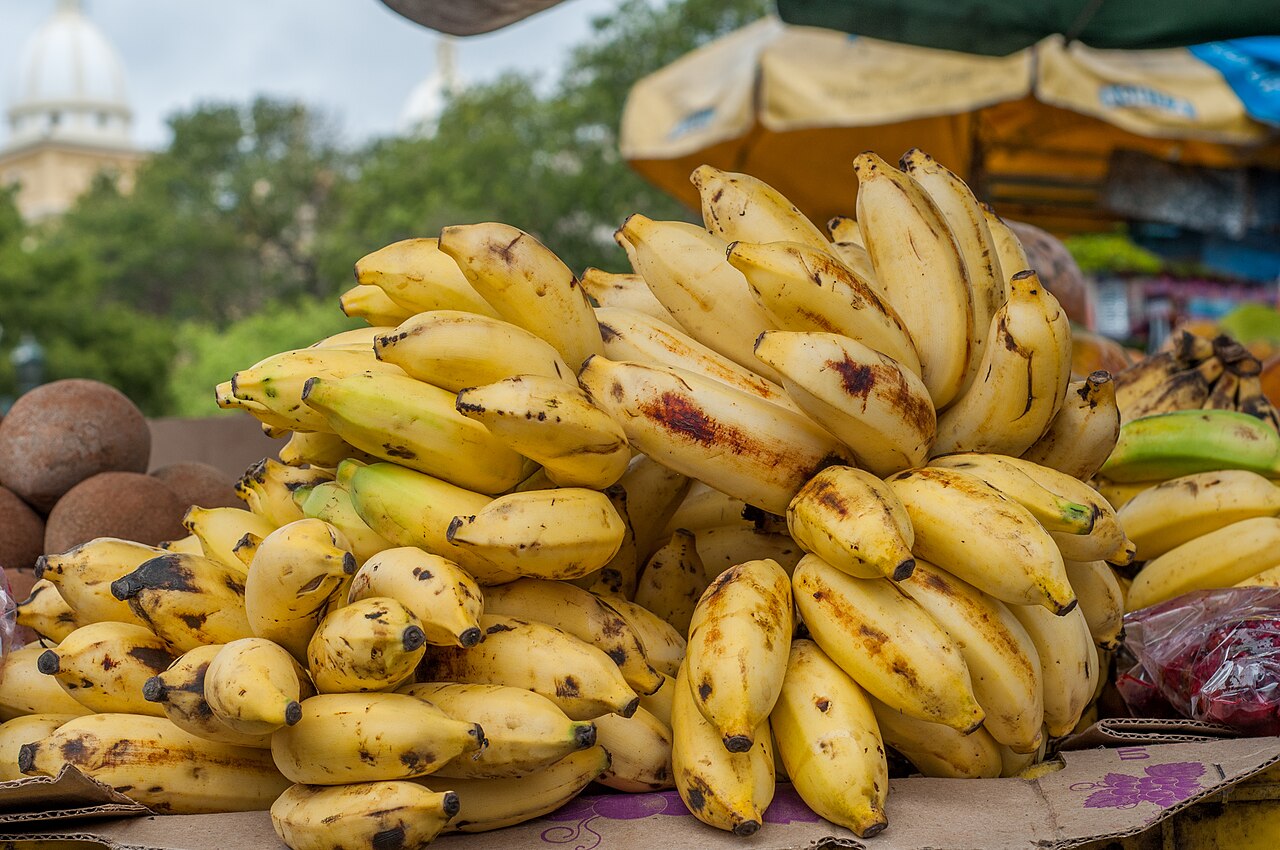
Yes, chickens can eat bananas, and the peels too. Bananas are safe, soft and easy for birds of every size to eat. Keep the portion small, about a 1 inch slice for a large hen and half that for a bantam, because bananas are high in sugar and starch.
Chickens can eat bananas safely, and ripe banana is one of the easiest treats to share with a flock because it needs no cooking and very little cutting. USDA FoodData Central lists raw banana at 89 kcal and 12.2 grams of sugar per 100 grams, so it is best as a small, occasional treat within the usual limit of about 10 percent of the daily diet.
This guide covers how much banana to give large fowl, bantams and chicks, how to prepare the fruit, what to do with banana peels for chickens, nutrition per 100 grams and what to watch out for.
How Much Banana Can Chickens Eat?
Treats of all kinds should stay at or below about 10 percent of what a chicken eats in a day. Purina describes that as about 2 tablespoons of treats for a laying hen eating half a cup of feed. A 1 inch slice of banana weighs roughly 12 to 15 grams, which is about a large hen’s entire treat budget for the day.
Bantams eat far less than large fowl, so cut their portion to roughly half: a small piece the size of a thumbnail or a spoonful of mashed banana. If you keep a mixed flock, scatter the pieces so the smaller birds get a turn.
| Bird | Banana per day | Serving idea |
|---|---|---|
| Large fowl hen or rooster | About a 1 inch slice (12 to 15 g) | Sliced or mashed |
| Bantam | About half a 1 inch slice | Mashed or cut into small bits |
| Chicks 2 to 4 weeks | A fingertip of mashed banana, shared | Mashed very soft |
| Whole flock of 6 large hens | About half a medium banana | Split peel, scattered pieces |
A medium banana weighs about 118 grams without the peel, so one banana is enough for about ten large hens or around twenty bantams. Offering banana two or three times a week, alternated with greens and vegetables, keeps variety in the treat bowl without tipping the diet toward sugar.
How to Prepare Bananas for Chickens
Ripe bananas with yellow skin and a few brown spots are ideal. They are soft enough that chickens can tear them apart easily. Very green bananas are firmer, starchier and less appealing to most birds, and overripe bananas are fine as long as they are not moldy or fermenting.
The simplest way to serve banana is to slice it into rounds and scatter the pieces. For bantams and young birds, mash it with a fork or cut it into small cubes. Sticky mashed banana can cling to beaks and feathers, so serve it on a flat dish or a clean board rather than on the bedding.
On hot days, frozen banana slices are a cooling treat. In winter, some keepers stir a little mashed banana into warm oatmeal, which makes a filling occasional snack. Keep these mixes simple: no added sugar, salt, butter or syrup.
Banana Peels for Chickens
Banana peels are not toxic to chickens, and some birds will peck at the inside of the peel or eat chopped pieces. Many chickens simply clean off the last bits of fruit and leave the tough outer skin. That is fine; the peel adds fiber but not much else.
Preparing Banana Peels
Wash peels well under running water before feeding, since the outside of the fruit is handled a lot and may carry residues from growing and shipping. Chop the peel into small pieces, or boil it for a few minutes to soften it, which makes it much easier to eat. Organic bananas are an option if you prefer to limit residues.
When to Skip the Peel
Skip peels that are black and slimy, moldy or have been sitting in the trash. Remove the hard stem end and any stickers. Large, whole peels can also tangle around feet or be dragged into nest boxes, so if your birds leave them alone, clear them out of the run at the end of the day.
Can Chicks Eat Bananas?
Chicks can eat a little mashed banana once they are a couple of weeks old and eating starter feed well, but they do not need it. Their growth depends on the protein in starter feed, and a crop full of sweet fruit leaves less room for it. Offer a fingertip-size dab of mashed banana for the whole brood, not per chick.
When chicks get anything besides starter, give them access to chick-size grit, and keep the banana soft so it is easy to swallow. Stop if you notice runny droppings or pasty vents.
Banana Nutrition per 100 Grams
Bananas are best known for potassium. The USDA FoodData Central figures below are for raw bananas. Like most fruit, banana is mostly carbohydrate with very little protein or fat, so it adds energy and some vitamins but does not replace any part of a balanced feed.
| Nutrient (per 100 g) | Raw banana |
|---|---|
| Energy | 89 kcal |
| Protein | 1.09 g |
| Fat | 0.33 g |
| Carbohydrate | 22.8 g |
| Fiber | 2.6 g |
| Total sugars | 12.2 g |
| Calcium | 5 mg |
| Magnesium | 27 mg |
| Potassium | 358 mg |
| Vitamin C | 8.7 mg |
| Vitamin B6 | 0.367 mg |
Compared with many fruits, banana has more fiber and starch and less water. That makes it more filling than melon or grapes, which is another reason to keep servings small.
Storing Banana Scraps
Banana scraps spoil fast. Keep leftover pieces and peels in a covered container in the refrigerator and use them within a day or two. Brown, soft flesh is still fine to feed, but anything that smells alcoholic, has turned slimy or shows mold should go to the compost.
Freezing works well for bananas that are getting too ripe. Peel, slice and freeze them on a tray, then store the slices in a bag for summer treats. Clean up uneaten banana and peels from the run each evening, because sweet scraps attract flies, wasps and rodents.
Related Foods
Other soft fruits that chickens enjoy include berries, melon, peeled and cored apples (without the seeds) and pitted peaches or plums. Plantains are safe when ripe or cooked plain, but fried plantain chips and banana chips are often salted, sweetened or fried in oil and are better left out. Banana bread and muffins contain sugar, butter and sometimes chocolate chips or nuts, so they are not good treats either.
What to Do If a Chicken Eats Something Toxic
Bananas are harmless, but treat buckets are where mistakes happen. If a chicken eats something risky, such as chocolate, avocado, moldy food or a salty, greasy leftover, take the food away, write down what was eaten and roughly how much, and move the bird to a quiet, shaded spot with fresh water.
Watch for lethargy, trouble breathing, a swollen neck or chest, tremors, diarrhea or a bird that stops eating. Contact a veterinarian who treats poultry right away, and act faster for bantams and chicks, since small bodies are affected by smaller amounts. The ASPCA Animal Poison Control Center (888-426-4435) is another option; a fee may apply.
What to Avoid
Avoid moldy or fermented bananas, banana products with added sugar, salt, chocolate or oil, and large servings that leave birds too full for their feed. Do not feed whole, unwashed peels straight from the trash. Keep in mind that the UC Davis School of Veterinary Medicine and University of California Cooperative Extension advise treating scraps as a treat, not the main course, and limiting fatty foods, so bananas should always come second to a complete feed.
Frequently Asked Questions
Quick answers to common questions about feeding bananas to chickens.
Can Chickens Eat Green Bananas?
Chickens can eat green bananas, but most birds prefer ripe yellow bananas with a few brown spots. Green bananas are firmer and starchier, so peel them and cut them into small pieces, and keep the portion to about a 1 inch slice for a large hen and half that for a bantam.
Can Chickens Eat Banana Chips?
Store-bought banana chips are best left out of a chicken’s diet. Most are fried in oil and salted or sweetened, and drying concentrates the sugar, so a 1 inch slice of fresh banana for a large hen, or half that for a bantam, is the better treat.
Can Chickens Eat Banana Bread?
No, banana bread is not a good treat for chickens. Banana bread contains added sugar and butter and sometimes chocolate chips or nuts, and chocolate is toxic to chickens. Offer a 1 inch slice of fresh banana to a large hen, or half that to a bantam, instead.
Do Chickens Like Bananas?
Yes, most chickens eagerly eat ripe banana, and the soft flesh is easy for large fowl, bantams and older chicks to tear apart. Many birds clean the fruit off the peel and leave the tough outer skin, which is fine; chopping or briefly boiling banana peel makes it easier to eat.
Sources (4)
These are the references used to check the facts on this page.
 Can Chickens Eat Chocolate?
 Can Chickens Eat Avocado?
 Can Chickens Eat Watermelon?
 Can Chickens Eat Tomatoes?