
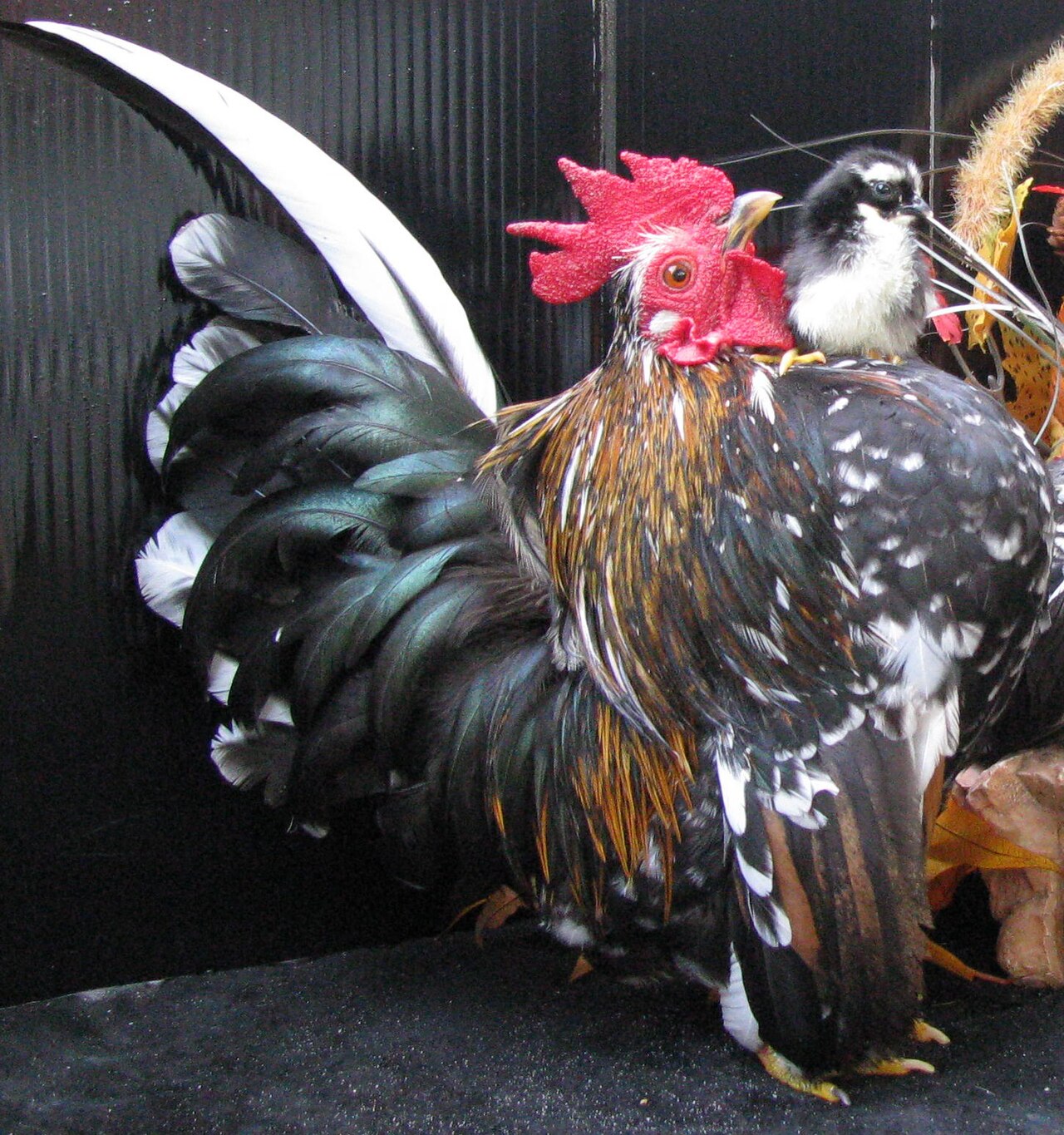
The Serama chicken is the smallest chicken breed recognized in the United States, a true bantam from Malaysia that stands upright like a tiny soldier and weighs less than a pound. The American Poultry Association and American Bantam Association accepted the breed in 2011, and the APA standard weights are just 16 ounces for a cock and 14 ounces for a hen.
Seramas are bred first as pets and show birds. They are friendly, easy to tame and happy in very small spaces, and hens lay tiny eggs surprisingly often. They are also fragile, sensitive to cold and tricky to hatch, so they reward keepers who are ready for a little extra care.
Serama Quick Facts
- Egg color
- Cream, Tinted
- Eggs per year
- 150 to 200
- Egg size
- Small
- Size class
- True bantam
- Hen weight, bantam
- 14 oz
- Rooster weight, bantam
- 16 oz
- Temperament
- Friendly
- Cold hardiness
- Low
- Heat hardiness
- High
- Broodiness
- Occasional
- Noise level
- Moderate
- Good for beginners
- No
- Confinement
- Good
- Purpose
- Ornamental, Pet
- Start of lay
- 16 to 20 weeks
- Comb type
- Single
- Feathered feet
- No
- Crest
- No
- Origin
- Malaysia
- APA / ABA recognition
- APA: Single Comb Clean Legged Bantam (White, 2011); ABA: Single Comb Clean Legged
- Conservation status
- Not listed
- Lifespan
- 7 to 10 years
History and Origin
The Serama comes from the state of Kelantan in Malaysia, where very small chickens have long been kept as household pets and caged songbird-style companions. The breed’s local name is Ayam Serama, and one popular account says it was named after a Thai king, Rama. The modern Serama was developed and named by breeder Wee Yean Een of Kelantan, probably from crosses of Japanese bantams and local Malaysian bantams, and it was first shown in 1990.
In Malaysia, Seramas are judged in contests that focus on posture, movement and attitude, and the best birds sell for high prices. The breed suffered a setback in 2004, when many birds were culled during the Asian avian influenza outbreak.
Arrival in North America
Louisiana breeder Jerry Schexnayder imported Seramas from Malaysia around 2001 and founded the Serama Council of North America (SCNA) in 2003. The SCNA promoted the breed and worked toward standard acceptance. In April 2011, the APA and ABA accepted the American Serama, starting with the White variety, which remains the only color on the APA’s accepted list. The American Serama Association formed the following year.
Appearance and Varieties
A Serama has a striking, upright build: a full, high breast pushed forward, a short back, a tail held almost straight up, and wings carried low, nearly vertical, beside the legs. Seen from the side, the head, breast and tail form a deep V. Birds have a single comb, red face and wattles, and a bold, alert stance that judges value highly.
Any color found in chickens can appear in Seramas, and breeders also keep frizzled and silkied feathered birds. For APA and ABA showing, though, only the White variety is currently accepted, in the Single Comb Clean Legged bantam class.
Weight Classes
Weight is central to the breed, and there are two different systems in the US. The APA and ABA standard sets one set of weights for the American Serama. The SCNA, which runs its own shows, divides Seramas into three size classes, labeled A, B and C, with Class A for the very smallest birds. According to Backyard Poultry magazine, Class A covers males under 12 ounces and females under 10 ounces.
| Serama Standard | Male | Female |
|---|---|---|
| APA/ABA American Serama (adult) | 16 oz (cock) | 14 oz (hen) |
| APA/ABA American Serama (young) | 14 oz (cockerel) | 12 oz (pullet) |
| SCNA Class A | Under 12 oz | Under 10 oz |
| Malaysian Seramas | Roughly 6 to 21 oz across several weight groups | |
The A, B and C classes are an SCNA system, not part of the APA standard. If you plan to show, check which organization runs the show and read its current rules before you breed for size.
Temperament
Seramas are known for being docile and very people-oriented. Many learn to perch on a hand or shoulder, and they tolerate handling well, which makes them a common choice for children’s shows and classroom pets. Cackle Hatchery and My Pet Chicken both describe the breed as especially docile and friendly.
Roosters strut and display constantly, and they crow often. The crow is smaller and higher than a large rooster’s, but it carries, so a Serama rooster is not a quiet option for close neighbors. Seramas also sound the alarm when they spot unfamiliar animals or objects. Keep them with other small, calm bantams, never with large breeds that may bully or injure them.
Egg Laying
For such a small bird, a Serama hen is a good layer. Typical hens lay about 150 to 200 tiny eggs a year, and My Pet Chicken rates production at about four eggs a week in good conditions. The eggs are cream or tinted, sometimes darker, and about five Serama eggs equal one large hen’s egg.
Hens mature early, often laying at around 16 to 20 weeks of age, and many lay through winter when kept warm and well lit. Serama eggs can hatch in as few as 19 days, two days sooner than most chicken eggs, but they are known to be hard to hatch in an incubator. Hens do go broody and are attentive mothers, though a tiny hen can only cover a few eggs.
Hatches are also unpredictable in size. A single clutch can produce some very small chicks, some larger ones and many in between, which is part of why breeding for show weights takes patience.
Care Needs
Seramas evolved in a hot, humid climate, and most of their care needs come back to temperature and size. Chicks are more sensitive to cold than most breeds and need a steady brooder temperature for longer. Adults handle cool weather better than early breeders expected, but they need a dry, draft-free shelter, and in cold northern winters many keepers bring them into a garage, barn or heated room.
Housing
Seramas need very little room. Backyard Poultry notes that a pair or trio can live in an enclosure about 24 by 18 inches, and many are kept in large indoor cages. Roosts at 2 to 4 feet are fine. Because they are so small, predator protection matters more than usual: hawks, cats, rats and even large snakes can take an adult Serama, so use a covered, fully enclosed run with small-mesh hardware cloth.
Feeding and Health
An adult Serama eats only about a pound of feed a month. Feed a complete layer ration in a crumble size small enough for tiny beaks, and use shallow waterers so chicks cannot drown. Watch for mites and lice, which hit small birds hard. For any bird that is lethargic, fluffed up or not eating, contact a veterinarian who treats poultry promptly, since small birds decline quickly.
Is There a Large Serama?
No. The Serama is a true bantam, which means there is no large fowl version of the breed. It was developed as a small bird from the start, and its entire appeal rests on its tiny size. Any “large Serama” you see advertised is either an oversized bird that would be faulted in shows or a cross with another breed.
Who the Serama Suits
The Serama suits keepers with very little space, people who want a friendly pet chicken that can live partly indoors, and families interested in showing. It is also a good match for warm Southern climates, where its heat tolerance is an advantage.
It is less suited to beginners in cold regions, to anyone who wants a hands-off flock, or to keepers with neighbors who will object to frequent crowing. If you want eggs for the kitchen, remember that you will need several Serama eggs to make one breakfast.
Where to Buy Serama Chicks
Seramas are harder to buy than most bantams. Several large hatcheries, including Cackle Hatchery, do not ship Serama chicks because the chicks are so small and fragile that they dehydrate quickly in the mail. Most Seramas in the US are sold by private breeders as hatching eggs, started birds or adults.
Look for breeders through the Serama Council of North America, the American Serama Association, the American Bantam Association and local poultry shows. Ask whether the flock is in the National Poultry Improvement Plan (NPIP), which weight standard the breeder follows, and whether you can pick birds up in person rather than having them shipped.
Frequently Asked Questions
Quick answers to common questions about Serama chickens.
How Long Does a Serama Chicken Live?
A Serama chicken typically lives 7 to 10 years. Because the breed is tiny and sensitive to cold, a dry, draft-free shelter, a fully enclosed run and prompt veterinary care for any bird that seems unwell make the biggest difference to a Serama’s lifespan.
Can You Eat Serama Chicken Eggs?
Yes, Serama eggs are edible chicken eggs, just very small: about five Serama eggs equal one large hen’s egg. A Serama hen lays roughly 150 to 200 cream or tinted eggs a year, so a small flock can still supply the kitchen.
Can a Serama Chicken Live Indoors?
Yes, a Serama chicken can live partly indoors, and many are kept in large indoor cages because a pair or trio needs only about 24 by 18 inches of floor space. Indoor Seramas still need a complete layer feed in a small crumble, shallow waterers and roosts at about 2 to 4 feet.
Sources (4)
Breed facts and figures on this page were checked against these references.
 Polish Chicken
 Sussex Chicken
 Lavender Orpington
 Easter Egger Chicken