
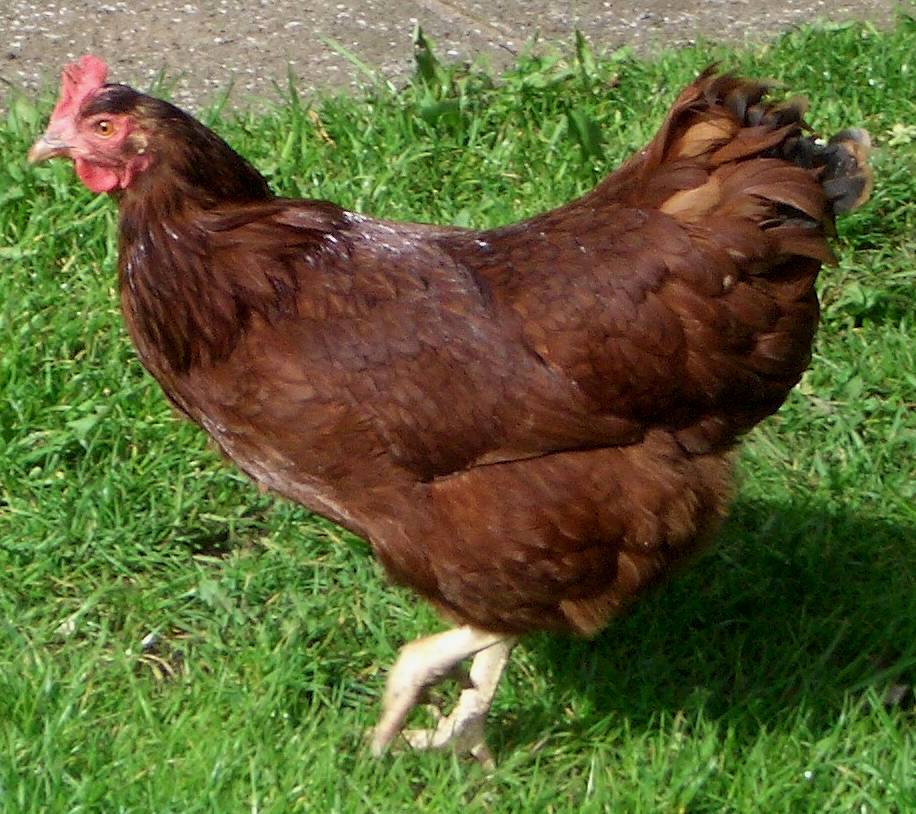
The Rhode Island Red is a hardy, American dual-purpose chicken that typically lays 200 to 300 large brown eggs a year, depending on the strain. It was developed in Rhode Island and Massachusetts in the late 1800s, and it has been the official state bird of Rhode Island since May 3, 1954.
One thing surprises many new keepers: the Rhode Island Red you buy from a farm store is often quite different from the deep mahogany bird in the show ring. This profile explains heritage and production strains, the breed’s looks and temperament, egg laying, care, and the bantam Rhode Island Red.
Rhode Island Red Quick Facts
- Egg color
- Brown
- Eggs per year
- 200 to 300
- Egg size
- Large
- Size class
- Large fowl and bantam
- Hen weight, standard
- 6.5 lb
- Rooster weight, standard
- 8.5 lb
- Hen weight, bantam
- 30 oz
- Rooster weight, bantam
- 34 oz
- Temperament
- Friendly
- Cold hardiness
- High
- Heat hardiness
- High
- Broodiness
- Occasional
- Noise level
- Moderate
- Good for beginners
- Yes
- Confinement
- Good
- Purpose
- Dual purpose
- Start of lay
- 18 to 24 weeks
- Comb type
- Single or rose
- Feathered feet
- No
- Crest
- No
- Origin
- Rhode Island and Massachusetts, United States
- APA / ABA recognition
- APA: American class; ABA: Single Comb Clean Legged and Rose Comb Clean Legged
- Conservation status
- Not listed (graduated from the priority list in 2023)
- Lifespan
- 5 to 8 years
History and Origin
Farmers in Rhode Island and southeastern Massachusetts developed the breed in the 1880s and 1890s, mostly as a practical farm bird for eggs and meat. The Livestock Conservancy lists its ancestors as Malay, Shanghai, Java and Brown Leghorn chickens, crossed and selected on working farms rather than by fanciers.
The single comb variety entered the American Poultry Association Standard of Perfection in 1904, and the rose comb variety followed shortly after. The breed quickly became one of the most important egg and meat birds in the country, and in 1954 Rhode Island named the Rhode Island Red its state bird, a rare honor for a domestic breed. The Rhode Island Secretary of State’s office notes simply that Rhode Island Reds “lay up to 300 brown eggs a year.”
Appearance and Varieties
A Rhode Island Red has a long, rectangular, brick-shaped body, often described as a flat back held level from shoulders to tail. Plumage is a rich red with black in the tail and some black in the wings. The eyes are red-orange, the shanks and skin are yellow, and the earlobes are red. Roosters have greenish-black tails and a bright red hackle and saddle.
The breed comes in two comb types, single and rose, which the APA treats as separate varieties of the same breed. The rose comb is low and flat, so it resists frostbite better than the tall single comb.
Heritage vs Production Strains
Since the 1940s, many Rhode Island Red lines were selected mainly for egg output. The Livestock Conservancy explains that this made those production strains smaller, lighter red in color and less broody. The older type, sometimes called heritage, exhibition or “old-type” Rhode Island Red, is larger, darker and more likely to go broody, and it is becoming harder to find.
| Trait | Heritage (Exhibition) Type | Production Type |
|---|---|---|
| Color | Deep, dark mahogany red | Lighter, brighter red |
| Body | Larger, broad and blocky | Smaller and lighter |
| Typical eggs per year | About 200 to 250 | About 250 to 300 |
| Broodiness | More likely to go broody | Rarely broody |
| Best for | Showing, breeding, dual purpose | Maximum brown eggs |
Egg figures are typical ranges from hatchery and conservation sources, and individual hens vary. Cackle Hatchery, for example, lists its exhibition-type Rhode Island Reds at about 200 to 250 eggs a year and notes they are more likely to go broody than production lines. Many popular red sex-link hybrids are partly Rhode Island Red, but they are crossbreds, not the breed itself.
Temperament
Rhode Island Red hens are generally calm, curious and easy to manage. They are active foragers that do well both free ranging and in a secure run, and they tend to be confident around people once they learn that you bring food. The Livestock Conservancy describes most hens as peaceful.
Roosters are another story. Rhode Island Red roosters have a reputation for being protective and sometimes aggressive, and the Conservancy notes that some can be aggressive at times. If you have small children or want a lap pet, start with hens only. Hens can also be assertive with gentler breeds such as Silkies, so watch the pecking order in mixed flocks.
Egg Laying
Most Rhode Island Red hens lay 200 to 300 brown eggs a year, with production strains at the upper end and heritage strains closer to 200 to 250. Eggs are large and medium to dark brown. The Livestock Conservancy notes that hens can begin laying at about 6 months old, and many production birds start a little earlier.
Like all hens, Rhode Island Reds lay best in their first two to three years and slow down after that. They keep laying fairly well through winter compared with many breeds, though shorter days still cut production without supplemental light. A broody heritage hen will stop laying while she sits.
Care Needs
Rhode Island Reds are among the easiest chickens to keep. They are hardy in both cold and heat, and the Conservancy notes they can produce eggs even in marginal conditions. Plan on about 4 square feet of coop space per bird and 8 to 10 square feet in the run, a quality layer feed with calcium available free choice, and clean water at all times.
Single comb birds, especially roosters, can get frostbite on their combs and wattles in very cold, damp coops, so focus on ventilation and dry bedding in winter rather than sealing the coop tight. Rose comb birds handle hard winters a little better. In summer, provide shade and cool water.
Because Rhode Island Reds can be assertive, give them enough room and multiple feeding stations if you keep them with timid breeds. For any sick or injured bird, see a veterinarian with poultry experience.
Bantam vs Standard Rhode Island Red
The Rhode Island Red bantam is a scaled-down version of the large fowl with the same red color and both comb types. APA standard weights for large fowl are 8.5 pounds for a cock and 6.5 pounds for a hen, while hatchery listings for bantams give about 34 ounces for a rooster and 30 ounces for a hen.
| Size | Rooster | Hen | Eggs |
|---|---|---|---|
| Standard (large fowl) | 8.5 lb | 6.5 lb | Large brown |
| Bantam | 34 oz | 30 oz | Small brown |
Bantam Rhode Island Reds lay small brown eggs, and Cackle Hatchery rates their production as excellent for a bantam. They eat far less, need less coop space and are a good option for small suburban yards. They are also popular with youth exhibitors because they show the breed type in a smaller package.
Who the Rhode Island Red Suits
The Rhode Island Red suits beginners who want a dependable, low-maintenance hen that lays well in a wide range of climates. Choose a production strain if eggs are your main goal, or a heritage strain if you want a bigger, darker dual-purpose bird that may hatch its own chicks.
It is less suited to keepers who want a very docile lap chicken, or to flocks of small, gentle breeds that may get pushed around. If space is tight, the bantam gives you the same look with smaller eggs and a smaller footprint.
Where to Buy Rhode Island Red Chicks
Production-type Rhode Island Red chicks are sold by nearly every major hatchery and farm store each spring, usually as sexed pullets or straight run. Some hatcheries also offer an exhibition or heritage type, and several carry Rhode Island Red bantams.
For true heritage birds that match the APA standard, look to breeders who show Rhode Island Reds or belong to a breed club, and ask to see the parent stock. Be careful not to confuse red sex-links, which are sold under many trade names, with purebred Rhode Island Reds.
Frequently Asked Questions
Quick answers to common questions about Rhode Island Reds.
How Long Do Rhode Island Red Chickens Live?
A Rhode Island Red typically lives 5 to 8 years. Good ventilation, clean water and a secure coop help any Rhode Island Red reach the upper end of that range.
How Long Do Rhode Island Reds Lay Eggs?
Rhode Island Red hens lay best for their first 2 to 3 years, often 200 to 300 eggs a year depending on strain, then production gradually declines. Older hens still lay, just less often, and shorter winter days cut output further.
How Can You Tell a Rhode Island Red Rooster from a Hen?
Some male Rhode Island Red chicks hatch with a white spot on the down of the wing, but this sign is not always accurate. As they grow, Rhode Island Red cockerels develop larger combs and wattles, longer tail feathers and pointed saddle feathers.
Are Rhode Island Reds Noisy?
Rhode Island Reds are moderately noisy. Hens are active foragers rather than quiet lap birds, and Rhode Island Red roosters crow like any rooster, so a hens-only flock is the better choice in neighborhoods with close neighbors.
Sources (7)
Breed facts and figures on this page were checked against these references.
- The Livestock Conservancy: Rhode Island Red Chicken
- Rhode Island Department of State: State Symbols
- Cackle Hatchery: Rhode Island Red Chicken (Exhibition Type)
- Cackle Hatchery: Rhode Island Red Bantam
- University of Wisconsin Extension: Chicken Breeds and Varieties (A2880)
- Purina Animal Nutrition: Pullets vs. Cockerels: How to Sex Chicks
- My Pet Chicken: How Can I Tell if My Juvenile Bird Is a Rooster?
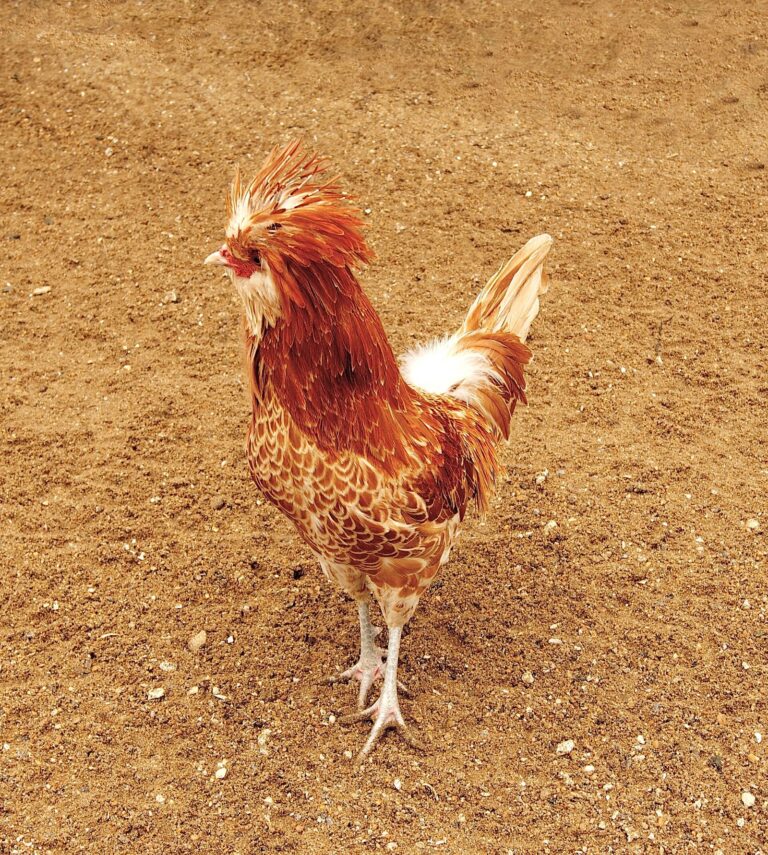 Polish Chicken
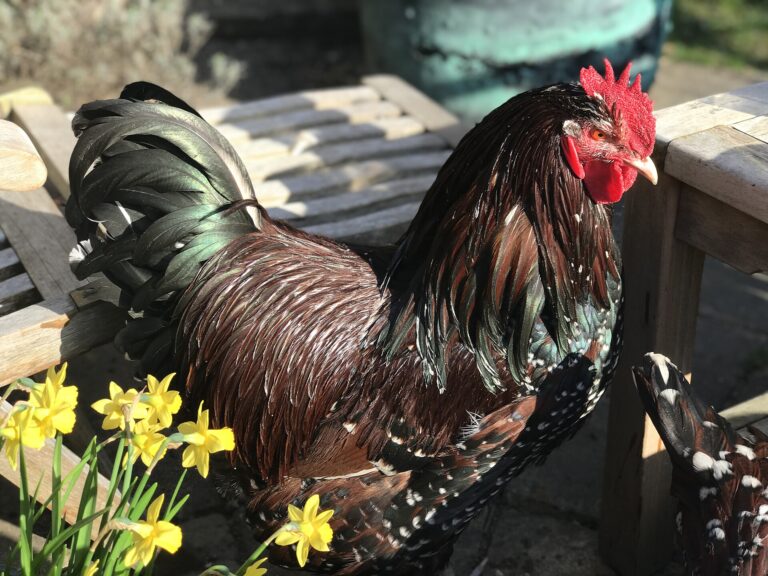 Sussex Chicken
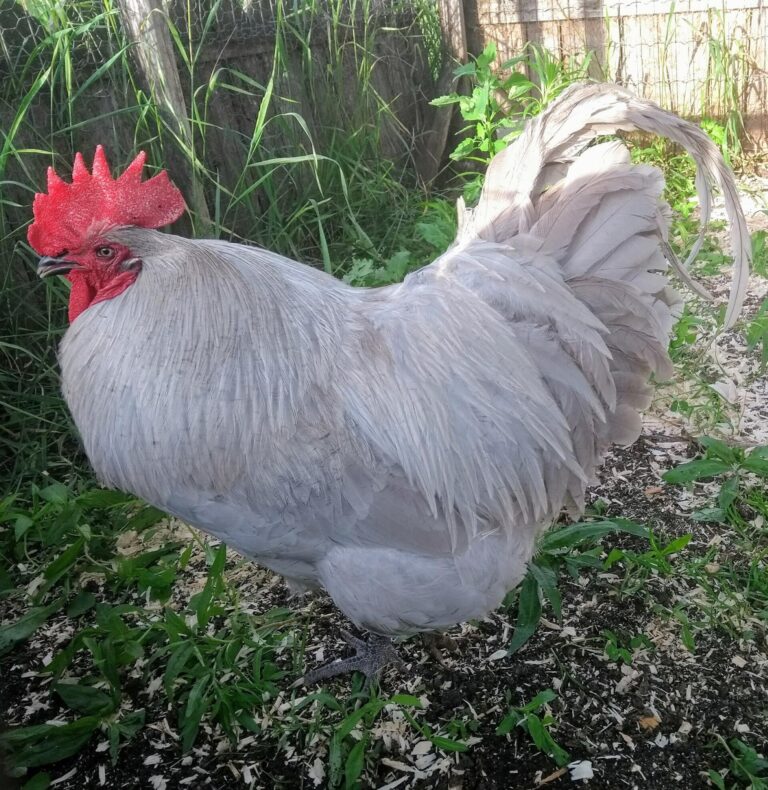 Lavender Orpington
 Easter Egger Chicken