
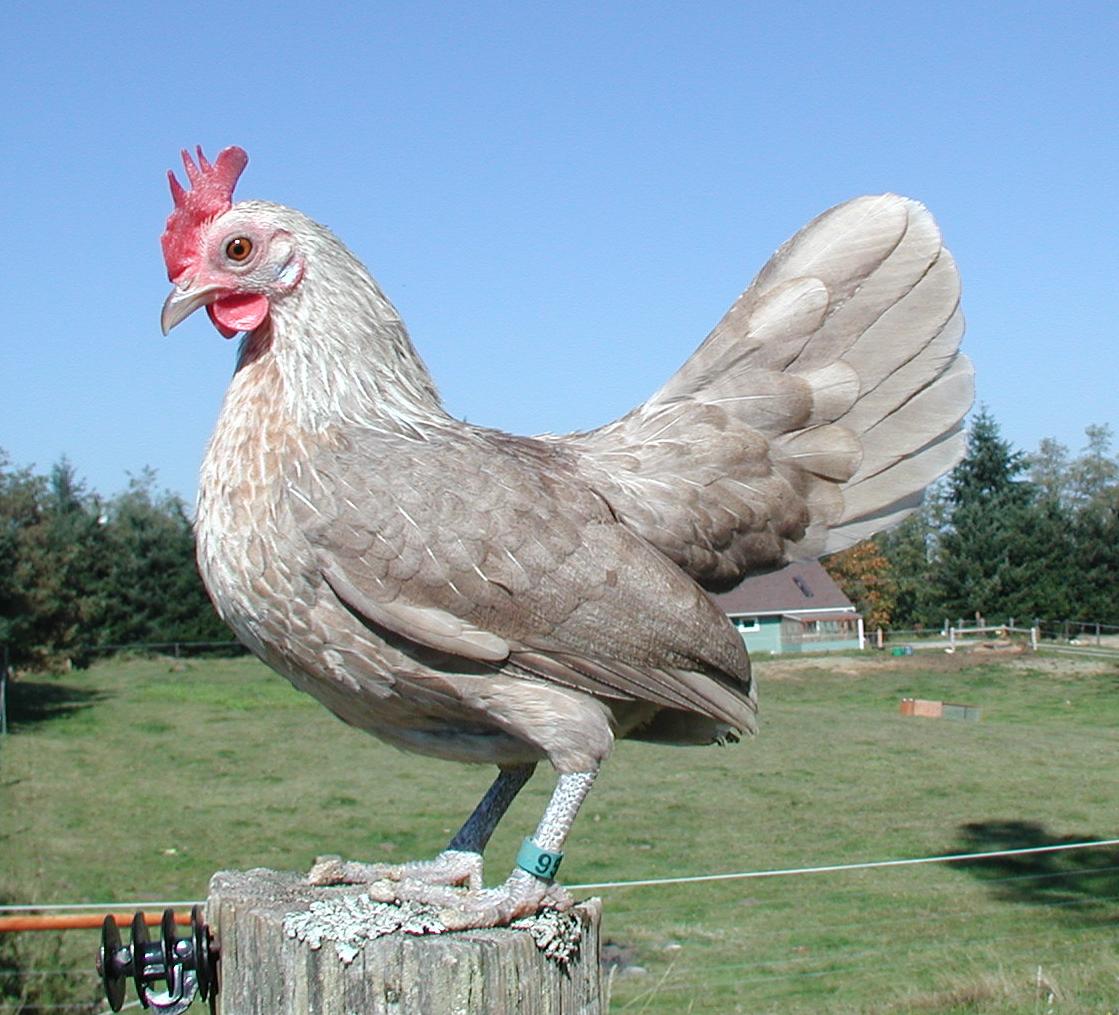
Bantam chickens weigh about one-fourth to one-fifth as much as standard (large fowl) chickens: roughly 16 to 30 ounces for an adult bantam versus about 4.5 to 13 pounds for standard breeds. Bantams also lay smaller eggs, about two-thirds the size of a standard egg, and need roughly half the coop space.
Beyond those headline numbers, the two sizes differ in feed, handling, hardiness and how well they suit a small yard. Here is a side-by-side comparison, followed by what each difference means in practice.
| Trait | Bantam | Standard (Large Fowl) |
|---|---|---|
| Adult weight | About 16 to 30 oz (1 to 2 lb) | About 4.5 to 13 lb, by breed |
| Size vs standard | One-fourth to one-fifth the weight | Full size |
| Egg weight | 15 to 20 oz per dozen | Usually 24 oz or more per dozen (USDA Large) |
| Eggs per year | About 50 to 120 for ornamental breeds | About 200 to 300 for good laying breeds |
| Indoor coop space | 1 sq ft per bird minimum | 2 sq ft per bird minimum |
| Outdoor run | 4 sq ft per bird | 10 sq ft per bird |
| Feed | Noticeably less | More, especially heavy breeds |
| Flying | Strong fliers in most breeds | Heavy breeds rarely clear a fence |
| Cold tolerance | Lower; small bodies lose heat faster | Higher in heavy, small-combed breeds |
| Handling | Easy for children | Heavier and harder for small kids |
These figures are typical ranges drawn from extension and USDA sources. Individual birds, strains and breeds vary.
Bantam Chicken Size and Weight
Bantam chicken size is set by breed standards, not by age. An adult bantam usually weighs 16 to 30 ounces, according to University of Wisconsin Extension, and University of Maryland Extension describes bantams as about one-quarter the size of large poultry. A true bantam such as the Sebright tops out around 20 to 22 ounces.
Standard chickens span a much wider range. A Leghorn hen may weigh only 4.5 to 5.5 pounds, while a Jersey Giant can reach 10 to 13 pounds, per Mississippi State University Extension. Most popular backyard breeds, including Rhode Island Reds, Orpingtons and Wyandottes, land between about 5.5 and 10 pounds.
Bantam miniatures are not exact scale models of their large counterparts. Their heads, tails and eggs tend to be proportionally larger than the body, so a bantam Cochin looks a little different from a shrunken large Cochin.
Egg Size and Laying
The biggest practical difference is the egg. Bantam eggs are about two-thirds the size of large fowl eggs and weigh 15 to 20 ounces per dozen. A USDA Large egg averages at least 24 ounces per dozen, and Peewee, the smallest USDA weight class, starts at 15 ounces per dozen, so most bantam eggs fall in the Peewee to Small range.
| Egg Size | Minimum Weight per Dozen | About per Egg |
|---|---|---|
| USDA Jumbo | 30 oz | 2.5 oz |
| USDA Extra Large | 27 oz | 2.25 oz |
| USDA Large | 24 oz | 2 oz |
| USDA Medium | 21 oz | 1.75 oz |
| USDA Small | 18 oz | 1.5 oz |
| USDA Peewee | 15 oz | 1.25 oz |
| Typical bantam (not a USDA class) | 15 to 20 oz | 1.25 to 1.7 oz |
In the kitchen, three bantam eggs replace about two large eggs. Very small bantam eggs, which can weigh 1 to 1.25 ounces, swap two for one. When a recipe needs precision, weigh the eggs.
Laying numbers depend more on breed than on size. Ornamental bantams may lay only 50 to 120 eggs a year, while bantam versions of productive breeds such as Leghorns, Rhode Island Reds and Plymouth Rocks lay considerably more, just smaller. Mississippi State notes that egg-laying breeds may produce 250 to 300 eggs a year or more, while Maryland Extension puts the average for pure breeds at about 150.
Space and Coop Needs
University of Maryland Extension recommends 1 square foot of indoor floor space and 4 square feet of outdoor run for each bantam, compared with 2 square feet inside and 10 square feet outside for each large chicken. In practice, a coop that fits four large hens can house about eight bantams.
Those numbers are minimums. More room reduces pecking and keeps bedding drier. Bantams also do well with smaller nest boxes (the smallest dimension should be at least 9 inches), lower roosts for heavily feathered breeds, and a roofed run, since most bantams fly far better than heavy standard breeds.
That last point surprises new keepers. A 4-foot fence may hold a Brahma or Orpington, but an Old English Game bantam or Sebright can clear it with ease. Plan on netting or a solid roof if your yard is open.
Feed and Cost
Bantams eat noticeably less than standard birds, which Mississippi State and Maryland Extension both list as a key advantage. A smaller flock appetite means feed bags last longer and less food sits out to attract rodents.
The nutrition is the same. Bantams eat the same complete layer feed as large hens, often as crumbles, which are easier for small beaks than large pellets. Offer oyster shell and grit as you would for standard layers, and keep treats small.
On cost per egg, standard laying breeds usually win, because they lay more eggs and larger ones. Bantams win on cost per bird and on space, which matters more when your yard is the limit.
Temperament and Handling
Size alone does not decide temperament, but it changes the experience. Bantams are easy to pick up and carry, which is one reason they are a 4-H favorite. Silkies, Cochins and d’Uccles are known for calm personalities, while Sebrights and game bantams tend to be quick and flighty.
Standard breeds include some of the gentlest backyard birds: Orpingtons, Australorps and Plymouth Rocks are known for docile temperaments. Their weight, though, can make them awkward for young children to hold safely.
Roosters deserve a mention. Bantam roosters crow just as standard roosters do, and some are bold for their size. A standard rooster that turns aggressive, on the other hand, is a real hazard to small children because of his weight and spurs.
Cold, Heat and Predators
Small bodies lose heat faster, so bantams generally need more winter protection than heavy standard breeds. University of Minnesota Extension notes that smaller breeds and birds with large combs or light feathering need extra care in cold weather, while heavier dual-purpose breeds overwinter well.
Predators are the other concern. Hawks, owls and house cats can carry off a bantam that would be too heavy as a large hen. A covered run, a locked coop at night and hardware cloth on every opening matter even more with a small flock.
Heat is less of a size issue. Breed, comb size and feathering play bigger roles, and both bantams and standard chickens need shade, airflow and plenty of fresh water in summer.
Which Should You Choose?
Choose bantams if your yard is small, you want pets that children can handle, you enjoy ornamental breeds, or you want broody hens to hatch chicks. Choose standard chickens if you want the most eggs for your feed, live where winters are harsh, or plan to raise birds for meat.
Many keepers do both. A mixed flock of a few productive standard hens and several bantams can supply plenty of eggs while still giving you the variety and personality bantams bring. Raise them together, add a second feeder and waterer, and keep an eye on the smaller birds at feeding time.
Frequently Asked Questions
Quick answers to common questions about bantam and standard chickens.
Can Bantams and Standard Chickens Live Together?
Yes, bantams and standard chickens can live together in one flock, and it works best when they are raised together from chicks. Add a second feeder and waterer, offer low roosts and hiding spots, and avoid pairing a heavy standard rooster with small bantam hens, since he can injure them.
Do Bantams Start Laying Later Than Standard Hens?
Yes, many bantams start laying later than standard hens, maturing at about 6 months for tight-feathered breeds and 9 months or more for loose-feathered breeds. Standard pullets typically begin laying at about 18 to 22 weeks of age, depending on breed.
How Many Bantams Fit in a Coop Built for Four Standard Hens?
A coop built for four standard hens holds about eight bantams, because bantams need roughly half the space: 1 square foot indoors and 4 square feet of run each, versus 2 and 10 square feet for a large chicken. Treat these as minimums and give more room when you can.
Do Bantam Eggs Hatch Faster Than Standard Chicken Eggs?
No, bantam eggs hatch in about 21 days, the same incubation period as standard chicken eggs. Strain, season and incubator conditions can move a bantam hatch by about one day, so bantam and standard eggs can be set in the same incubator on the same date.
Sources (7)
Facts on this page were checked against these references.
- University of Wisconsin Extension (North Central Regional Extension Publication 209): Bantams
- University of Maryland Extension: Raising Your Home Chicken Flock (EB-409)
- USDA Agricultural Marketing Service: United States Standards, Grades, and Weight Classes for Shell Eggs
- Mississippi State University Extension: Choosing the Right Breed for Your Backyard Flock (P3036)
- University of Minnesota Extension: Caring for Chickens in Cold Weather
- University of Wisconsin Division of Extension: Life Cycle of a Laying Hen
- Mississippi State University Extension: Care and Incubation of Hatching Eggs
 Best Chicken Breeds for Beginners
 Bantam Chickens
 Can You Keep Chickens in City Limits?