
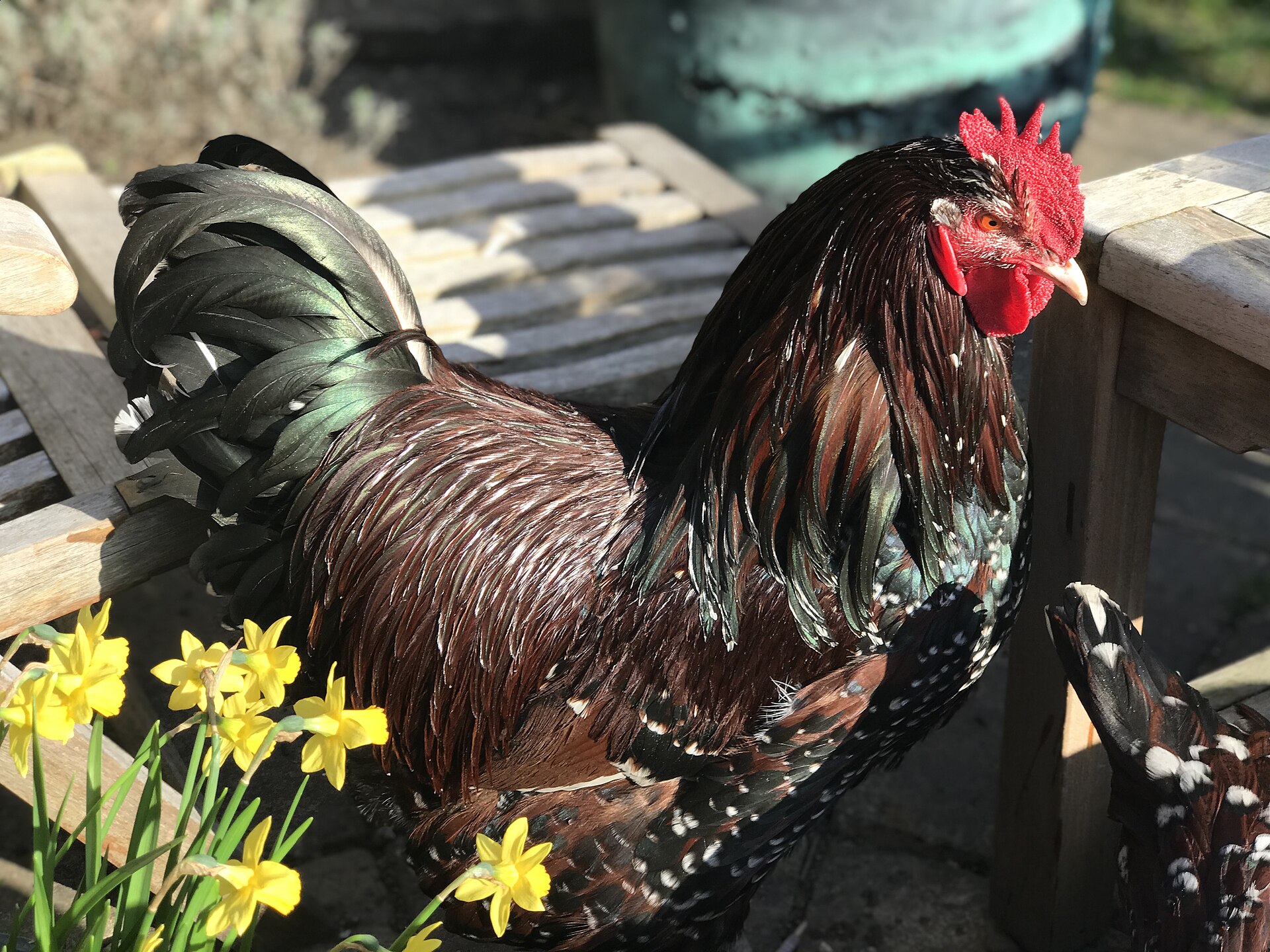
The Sussex is a dual-purpose chicken from southeast England, and the Speckled is its best-known variety in the United States. The Speckled, Red and Light are all dual-purpose varieties. Several hatchery listings put it at about 180 to 240 light brown eggs a year.
The American Poultry Association admitted the Speckled and Red in 1914 and the Light in 1929, all in the English class. The Livestock Conservancy’s 2026 Conservation Priority List places the Sussex in its Recovering category, the least threatened of its four levels. Bantam Sussex exist as well, although they remain rather rare.
Sussex Quick Facts
- Egg color
- Light Brown
- Eggs per year
- 180 to 240
- Egg size
- Large
- Size class
- Large fowl and bantam
- Hen weight, standard
- 7 lb
- Rooster weight, standard
- 9 lb
- Temperament
- Docile
- Cold hardiness
- High
- Heat hardiness
- Medium
- Broodiness
- Occasional
- Noise level
- Moderate
- Good for beginners
- Yes
- Confinement
- Good
- Purpose
- Dual purpose
- Start of lay
- 22 to 26 weeks
- Comb type
- Single
- Feathered feet
- No
- Crest
- No
- Origin
- England, county of Sussex
- APA / ABA recognition
- APA: English class; ABA: Single Comb Clean Legged
- Conservation status
- Recovering
- Lifespan
- 5 to 8 years
History and Origin
The Sussex takes its name from the English county where it was prized as a table fowl. Its native region is southeast England, covering Surrey, Kent and Sussex.
Roman Claims and the Documented Record
Claims about the breed’s age need care. The Livestock Conservancy says the area around Kent, Sussex and Surrey has been a poultry center since the Roman invasion of Britain in 43 A.D., which describes the region and not a breed. Hobby Farms says some poultry historians trace Sussex history to the Roman occupation, but it also calls that history unclear.
Hoover’s Hatchery goes further, stating that Speckled Sussex originated in England in AD 43, without citing a source. The firmer record begins in the 1800s, when birds described as Old Sussex or Kent Fowl appeared at the first poultry show at London Zoo in 1845, and a breed standard with light, red and speckled varieties followed in 1902.
The old birds had nearly slipped away by then. As Asiatic fowl reached England in the 19th century, farmers crossed them with local birds.
By 1900, very few flocks were left that had not been contaminated by crossbreeding. In 1903, E.J. Wadman formed a club for Sussex chickens.
Arrival in America and APA Recognition
Sussex chickens reached America about 1912. The breed sits in Class III, English, with the Speckled and Red dated 1914 and the Light dated 1929.
Conservation Status
The Conservancy’s 2026 poultry list shows the breed as Sussex (R), for Recovering. Its categories run from Critical through Threatened and Watch to Recovering, which the Conservancy describes as the least threatened.
Appearance and Varieties
All Sussex share a rectangular body, a single red comb, red wattles and earlobes, and white skin. Sussex are alert, attractive and good foragers.
Recognized and Other Varieties
The APA recognizes three varieties: Speckled, Red and Light. England also recognizes the Brown, a very dark red, and breeders have created Coronation, Buff, White and Silver. The British standard lists eight colors.
The Light has a white body with black tail and wing tips, while the Coronation has the same markings with lavender in place of the black. The Speckled is the oldest variety, and in the U.S. it is the most popular color, while the Light became the most popular in England and Canada.
How Speckled Plumage Changes with Each Molt
The Speckled has a rich mahogany base color, with a white tip on each feather separated from the rest by a black bar. The speckles become more numerous with each passing molt, so an older hen may look whiter than a pullet.
One keeper reports that Sussex get whiter with each molt. Speckled chicks vary too, from creamy buff to dark chestnut.
| Size | Cock | Hen | Egg Size |
|---|---|---|---|
| Standard | 9 lb | 7 lb | Large |
| Bantam | 36 oz (Hobby Farms) | 32 oz (Hobby Farms) | Small |
The standard weight for a cockerel is 7.5 pounds, and for a pullet it is 6 pounds. Bantam weights are less settled.
Hobby Farms gives 36 and 32 ounces without naming a standard, Poultrykeeper gives 1 to 1.2 kg for cocks and 780 to 800 g for hens, and Poultry Hub gives 1.5 kg and 1.1 kg. No APA or ABA figure could be confirmed online, so exhibitors should check the current standard.
Temperament
The Sussex is alert and active, but also unusually docile, calm, curious and friendly. The Speckled is not considered flighty and generally has a calm, gentle disposition.
Sources differ on how Sussex behave in a mixed flock. The Conservancy says they are not aggressive with other breeds, so they may need watching to make sure they are not bullied. Hobby Farms warns that bored Sussex can bully other flock members, and it suggests fresh straw for scratching and perches to keep them occupied.
On noise, Lafeber rates the Sussex as Moderate. The breed is chatty and a bit noisier than some other breeds.
Egg Laying
The Speckled Sussex appears in our roundup of the best egg layers. Hobby Farms says hens lay through the coldest winter months. The Conservancy describes eggs as large and tan to brown.
Annual Egg Counts by Source
Published figures for the Speckled vary by seller. McMurray gives 151 to 220 eggs a year, while Cackle’s breed sheet, Stromberg’s and Valley Hatchery all give 180 to 240. Cackle’s product page gives 200 to 240, and Hoover’s gives 240 medium cream eggs. The Conservancy gives 200 to 250 for the breed as a whole, while calling hens fair-to-good layers.
Sussex hens begin laying at 22 weeks of age, while hens in general begin at around six months. The quick-facts range of 22 to 26 weeks spans those two figures.
How the Speckled Compares with the Light and Red
Egg counts show no clear gap, even at one seller. Cackle’s spec tables show about 240 to 260 eggs a year for the Light against 200 to 240 for the Speckled, with light brown eggs for both. However, its Speckled page also says around 240 in one passage and around 250 in another, and it labels the table as estimates only.
None of the sources listed here gives a separate egg count for the Red, so its comparison rests on color and following. Sand Hill Preservation Center describes its Reds as a medium shade of red with some black in the neck and tail, while the Speckled has white spots on a chestnut brown background. The Red has not captured the eye of many fanciers.
The Light has figured prominently in commercial strains in Britain. Some people say the Light is less broody than the Speckled, Red and Dark Brown varieties. Speckled chicks take a little longer to mature, and one hatchery notes that the speckled coloring helps camouflage birds from predators.
Broodiness
Sources disagree on how often Sussex hens go broody. McMurray rates the Speckled very likely to sit, Hobby Farms says hens go broody and are excellent mothers, and Community Chickens reports a tendency toward broodiness. Cackle says they may go broody from time to time, Hoover’s says occasionally, and Poultrykeeper says they rarely do. The Occasional rating in the quick facts is an editorial middle value.
Care Needs
Plan on 3 to 4 square feet per laying hen inside the coop and 10 square feet in the run, along with one nest for every 4 to 5 females. For roosts, Ohio State University Extension suggests at least 6 to 8 inches per chicken, and Virginia Cooperative Extension recommends 8 to 10 inches. The coop size calculator can work out space for a whole flock, using its own per-bird figures.
Feed and Weight
A layer feed with 16 to 18 percent protein and 3.5 to 4 percent calcium is recommended, with oyster shell as a calcium supplement. The feed calculator can estimate how much to buy.
Weight deserves attention with this breed, since it puts on fat very easily. Feeding adults twice daily instead of leaving feed out is one suggested approach, and both Hobby Farms and Tractor Supply link excess fat to egg binding and oviduct prolapse.
Cold and Heat
The Speckled Sussex is among the breeds that winter well, and Ohio State warns that large combs can be a site for frostbite. Heat is less clear. The Conservancy says the breed is not fond of it and Tractor Supply says dense feathering can make birds less resilient, while Hoover’s calls them cold and heat hardy. Shade and extra waterers in the run are a sensible precaution.
Lifespan
Tractor Supply lists a lifespan of 5 to 8 years, the range used in the quick facts. Hobby Farms gives an average of six to eight years, Lafeber says about 8 years, and Backyard Poultry says Sussex can live for eight years with good care.
Bantam vs Standard Sussex
The American Bantam Association lists Sussex in its Single Comb Clean Legged class, with seven varieties: Birchen, Buff, Dark Brown, Light, Red, Speckled and White. The APA list published through 2012 places bantam Sussex in the same class, with only Light, Red and Speckled. Our bantam vs standard guide explains the general size differences.
Age and Rarity of the Bantam
The Sussex Bantam originated in Britain around 1920. After the large fowl were accepted in the American Standard in 1914, bantams followed in 1960, and they remain rather rare and difficult to locate.
Eggs and Upkeep
Plan on 2 to 3 square feet per bantam in the coop and 5 to 8 in the run. It usually takes two bantam eggs to equal one regular egg in a recipe, and Sussex Bantams are described as excellent layers that often continue through winter.
Who the Sussex Suits
The Sussex suits keepers who want a calm, attractive layer that also has table weight, and it is one of our best breeds for beginners. Its friendly, calm personality makes it easy for beginners to handle, and it does well in confinement if it has an area to roam.
Buyers short on space should note that standard cocks reach about 9 pounds and bantams are hard to find. Keepers weighing other options can compare traits in the breed finder.
Where to Buy Sussex Chicks
Cackle Hatchery, Murray McMurray Hatchery, Meyer Hatchery, Stromberg’s and Valley Hatchery all list Speckled Sussex chicks, and Cackle also lists the Light. Sand Hill Preservation Center lists Light, Red, Speckled and Coronation. The Speckled may be easy to find, while Light and Coronation Sussex have limited availability.
Bantams are harder, since the Speckled listings at Cackle and Meyer show no bantam size. The American Bantam Association links to a list of sanctioned shows for readers who want to look for exhibitors.
Frequently Asked Questions
Quick answers to common questions about the Sussex chicken.
What Color Eggs Do Speckled Sussex Lay?
Speckled Sussex lay light brown eggs, according to Cackle Hatchery. The Livestock Conservancy describes them as tan to brown, and Hoover’s Hatchery lists them as cream.
Do Speckled Sussex Get More Speckled with Age?
Yes. The speckles become more numerous with each passing molt, so older hens may show more white than young birds.
Is the Sussex Chicken Endangered?
The Sussex is on the Livestock Conservancy’s 2026 Conservation Priority List, but only in the Recovering category. That is the least threatened of its four categories.
How Big Is a Sussex Bantam?
Published figures vary. Hobby Farms gives 36 ounces for bantam cocks and 32 ounces for hens, compared with 9 pounds and 7 pounds for standard birds, while Backyard Poultry gives a broader two to four pounds. No APA or ABA figure could be confirmed online, so exhibitors should check the current standard.
Sources (40)
Breed facts and figures on this page were checked against these references.
- Livestock Conservancy: Sussex Chicken
- Livestock Conservancy: 2026 Conservation Priority List, Poultry
- Livestock Conservancy: 2026 Conservation Priority List
- University of Illinois Extension: Recognized Breeds and Varieties
- University of Wisconsin Extension: Chicken Breeds and Varieties (A2880)
- University of Wisconsin Extension, Lincoln County: APA Recognized Classes, Breeds and Varieties
- American Bantam Association: Active Breed and Variety List, March 2021
- American Bantam Association: Recognized Breed and Variety
- Oklahoma State University: Sussex Chickens
- Purdue Extension: Choosing a Chicken Breed (AS-518)
- Ohio State University Extension: Winter and Your Backyard Chickens
- Virginia Cooperative Extension: Small-Scale Poultry Housing
- Utah State University Extension: Managing Chickens From Chicks to Peak Egg Production
- University of Minnesota Extension: Raising Chickens for Eggs
- Hobby Farms: Sussex
- Hobby Farms: Speckled Sussex, Heritage Breed Poultry Profile
- Hobby Farms: What Are Bantams?
- Mother Earth News: Sussex Chickens
- Community Chickens: Breed Profile, Sussex
- Backyard Poultry: Speckled Sussex Chicken Breed
- Poultry Hub: Sussex
- Poultrykeeper: Sussex Chickens
- Omlet: Sussex Bantam Chickens
- Wikipedia: Sussex Chicken
- BackYard Chickens: Speckled Sussex, More White After Molt?
- Cackle Hatchery: Speckled Sussex
- Cackle Hatchery: Speckled Sussex Breed Sheet
- Cackle Hatchery: Speckled Sussex Chickens
- Cackle Hatchery: Light Sussex Chicken
- Cackle Hatchery: Speckled Sussex Chickens in the Heritage Breed Spotlight
- Cackle Hatchery: Chicken Breed Abbreviations
- Murray McMurray Hatchery: Speckled Sussex
- Hoover’s Hatchery: Speckled Sussex
- Meyer Hatchery: Speckled Sussex Day Old Chicks
- Stromberg’s Chickens: Live Speckled Sussex Chicks
- Valley Hatchery: Speckled Sussex Chicks
- Sand Hill Preservation Center: Chickens
- Dunlap Hatchery: Speckled Sussex
- Tractor Supply: Speckled Sussex Chicken Breed Guide
- Lafeber Company: Sussex
Photo credit: Speckled Sussex cockerel by Chefsbird, via Wikimedia Commons, licensed under CC BY-SA 4.0. Image resized.
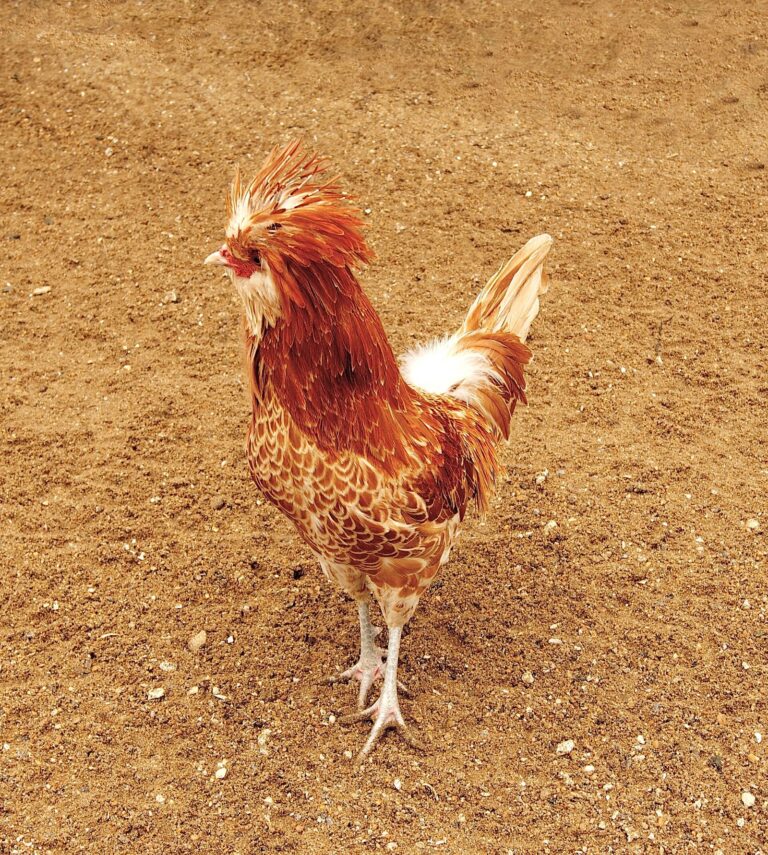 Polish Chicken
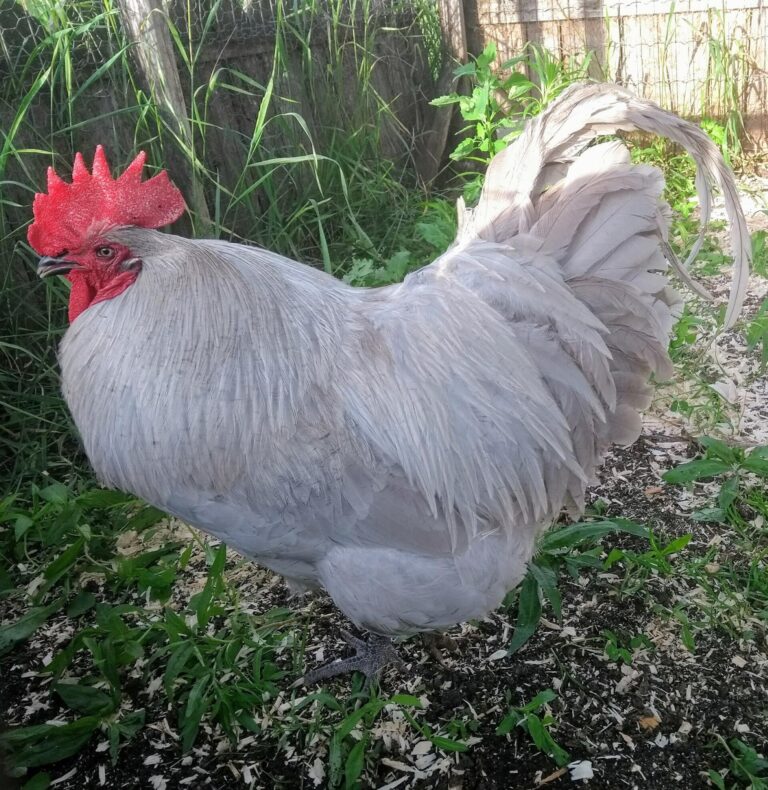 Lavender Orpington
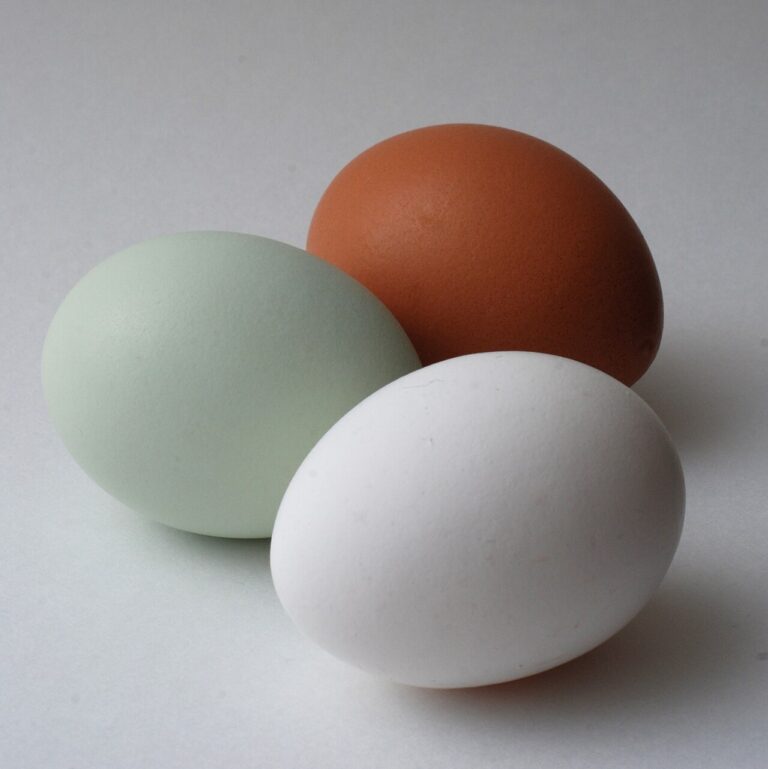 Easter Egger Chicken
 Australorp Chicken